
$200 Diesel and 507 Million Barrels Drawn (11 September 2026): The IEA Says the Squeeze Moved From the Wellhead to the Refinery
IEA, 11 September: 507mb of inventory drawn since February, diesel above $200/bbl, Gulf product exports down 60%. The shortage is in refining, not crude.
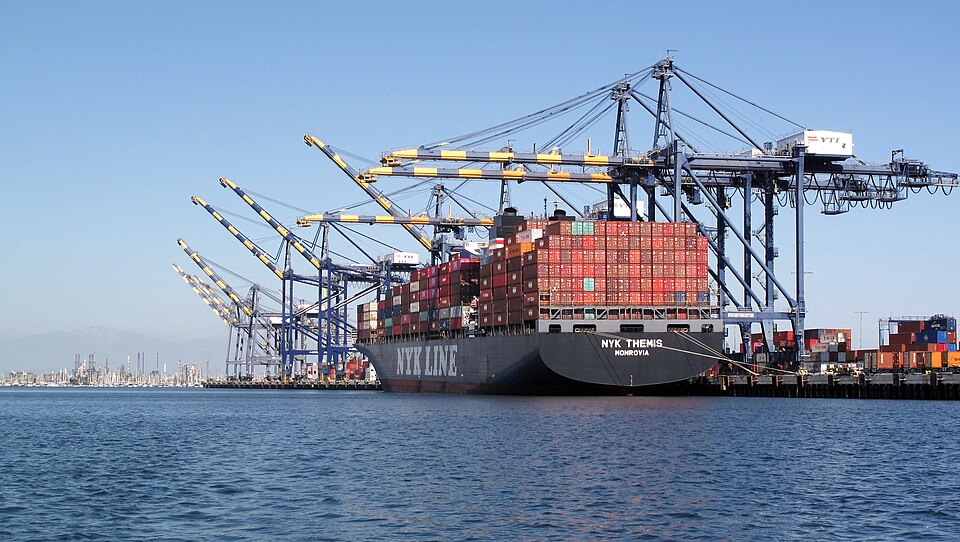
$200 Diesel and 507 Million Barrels Drawn (11 September 2026): The IEA Says the Squeeze Moved From the Wellhead to the Refinery
The International Energy Agency's Oil Market Report, published on 11 September, put audited balances behind eight months of headlines — and they are larger than the crude price implies. Global observed inventories have fallen 507 million barrels since February, an average draw of 2.8 mb/d, while total Gulf oil exports ran near half their pre-war level in August. The striking part is where the tightness now sits: ICE Brent futures traded around $105, physical North Sea Dated reached $113.48 on 9 September, and US diesel passed $200 a barrel, 94% above pre-war. The bottleneck has moved from the wellhead to the refinery.
This piece has argued since late August that a war-risk premium prices a probability times a volume times a duration, and that through this conflict the volume term stayed empty: destroyed Iranian hulls carried barrels that were no longer reaching market anyway. The hull-by-hull part of that argument still holds. The conclusion drawn from it does not. The IEA's September accounts show the volume term was never empty — it was being absorbed by inventory, half a billion barrels of it, which is exactly why a real shortage could build for months without the crude price behaving like one. What follows sets out what the report measured, why the pain is concentrated in diesel rather than crude, and what the meeting scheduled in Oman on Monday would and would not change.
- 507 million barrels of global inventory drawn since February. Observed stocks fell a further 95 mb in August alone, an average draw of 2.8 mb/d across the war, per the IEA's 11 September Oil Market Report.
- The shortage is in products, not crude. US diesel and gasoil passed $200/bbl in early September, 94% above pre-war, against ICE Brent futures around $105 — up $21 since the start of August and 45% above pre-war.
- Physical is trading far above paper. North Sea Dated averaged $91.00 in August, then reached $113.48 on 9 September, with backwardation the IEA called extreme.
- Two diesel exporters were removed at once. Gulf net diesel and gasoil exports averaged 390,000 b/d in August, just over a quarter of pre-war; together with Russia, whose refining system is under sustained attack, the two ran 1.6 mb/d below February, when they supplied almost 45% of global seaborne trade in the fuel.
- The supply hole is now measured. Total Gulf oil exports ran around 13 mb/d in August, near half pre-war, with more than 10 mb/d of Gulf production shut in; the IEA cut 2026 world supply to 100.7 mb/d, down 5.7 mb/d on the year.
- Demand is being destroyed, not merely deferred. The agency now sees 2026 demand falling 2.5 mb/d, 940 kb/d steeper than a month ago, with the decline easing from 5.3 mb/d in Q2 to 2 mb/d in Q4.
- The second front widened again. Ukrainian drones struck Rosneft's Saratov refinery on 11 September, its second reported hit in days.
- And for the first time, a two-way risk. The FT reported that Iran and the six GCC foreign ministers are expected to meet in Salalah, Oman on Monday 14 September over a temporary Hormuz shipping arrangement.
- Commodities is one of the five factors the meter scores across the eight majors. See where they currently sit →
What actually happened: the IEA put audited numbers on the hole
The Oil Market Report published on 11 September is the first document in this conflict that measures the thing everyone has been guessing at. Three findings matter more than the rest.
First, inventories did the balancing, and they are running out. Global observed oil inventories fell 95 million barrels in August — a rate of 3.1 mb/d — taking cumulative draws since February to 507 million barrels, or 2.8 mb/d on average. Oil on water alone fell 65 mb as tanker traffic out of the Middle East came under renewed attack. Non-OECD stocks drew 52 mb, led by China, while OECD stocks rose 23 mb only because commercial builds outweighed a 19 mb draw on government reserves.
Second, the supply loss is now quantified rather than inferred. Global production fell 1.6 mb/d month on month to 100.1 mb/d in August, with more than 10 mb/d of Gulf output shut in on security grounds. The agency cut its 2026 world supply forecast to 100.7 mb/d, down 5.7 mb/d year on year and 1.3 mb/d below its own August estimate, and pushed the expected Gulf recovery into 2027. Total Gulf oil exports ran around 13 mb/d in August, close to half their pre-war level; crude losses have narrowed to just under 45%, helped by barrels bypassing the strait and by US naval escorts, but refined product and LPG exports remain nearly 60%, or 3.7 mb/d, below February.
Third, demand is being destroyed. The IEA now expects world oil demand to fall 2.5 mb/d in 2026, 940 kb/d steeper than it estimated a month ago, with losses concentrated in middle distillates and petrochemical feedstocks, especially in Asia. The pace of decline eases through the year — 5.3 mb/d in the second quarter, 3.4 mb/d in the third, 2 mb/d in the fourth — and the agency projects a 2.6 mb/d recovery in 2027 that narrowly offsets this year's losses. Demand destruction of that size is itself a price mechanism: it is the market clearing at a level where some consumption simply stops.
Prices reflected the report in both directions during the week. ICE Brent traded around $105 at the time the IEA wrote, up $21 a barrel since the start of August and 45% above pre-war levels, having settled at $101.21 on 9 September and traded as high as $104.69 on 10 September. It then gave back part of the week's gain on Friday 11 September as the Salalah report circulated — the first session in a fortnight in which a diplomatic headline outweighed a military one.
The bottleneck moved from the wellhead to the refinery
The single most useful number in the September report is not a crude price. It is 390,000 barrels a day.
That is what the Gulf countries collectively netted out in diesel and gasoil exports during August — just over a quarter of their pre-war rate — as flows through the Strait of Hormuz stayed severely constrained. Set beside it the second number: Russia, whose refining system has suffered what the IEA describes as a near-halt to product exports following intensified Ukrainian attacks. Combined, net diesel and gasoil exports from the Gulf and Russia in August ran 1.6 mb/d below February, when those two sources accounted for almost 45% of global seaborne trade in the fuel.
Diesel is roughly 30% of global oil demand and it is the least substitutable barrel in the system. It moves freight, farms, mines and construction; there is no consumer discretion to squeeze, only activity to cancel. So the shortfall goes straight into price. US diesel and gasoil passed $200 a barrel in early September, 94% above pre-war levels, with Europe and Asia close behind, while crude futures sat 45% above pre-war. The gap between those two percentages is the story of this quarter.
Refiners elsewhere have responded exactly as the incentive dictates. Global throughputs reached a summer peak of 81.4 mb/d in August, up 960,000 b/d on the month — and still 4.2 mb/d below a year earlier, because the losses in the Middle East, Russia and Asian crude importers are larger than the gains anywhere else. The IEA expects global runs to fall 2.6 mb/d to 81.5 mb/d across 2026. Margins reached record levels in the Atlantic Basin in August, led by diesel cracks, while Singapore’s profitability was undercut by surging freight rates — the same freight that lengthening voyages created.
The mechanism to hold onto is that a refining bottleneck behaves differently from a crude bottleneck in one respect that matters for how long this lasts. Shut-in crude capacity can return in weeks once the security risk clears. A damaged distillation or hydrocracking unit returns on an engineering schedule measured in quarters, and only if the parts can be imported — which, for Russia, sanctions make slow by design. That asymmetry is why the IEA frames the resolution of both wars, not just the Gulf one, as the condition for the market to loosen.
The second front: why a Black Sea terminal reprices a Gulf premium
Ukraine hit Rosneft’s Saratov refinery again overnight on 11 September. Ukraine’s General Staff said the strike sparked a fire at the facility, with the extent of the damage still being assessed, per the Kyiv Independent; the plant has an annual processing capacity of roughly 4.8 million metric tonnes of crude, on the order of 100,000 barrels a day, and had already been struck days earlier. Taken alone it is a small number. Taken as the IEA now takes it — as one node in a refining system suffering a near-halt to product exports under sustained attack — it is part of the largest single contributor to the diesel squeeze described above.
Novorossiysk, the earlier target in this thread, matters to the oil price for a reason that has nothing to do with Iran.
The port hosts Sheskharis, Russia's main oil export facility on the Black Sea, handling around 700,000 barrels a day of crude. It has been tested already: after a Ukrainian drone attack on 12 August, the terminal suspended operations on 14 August, a tanker scheduled to load departed without its cargo during a drone alert, and loadings halted as storage tanks reached capacity. That episode is the whole argument. It established that a strike on this specific node does not merely frighten the market — it removes barrels from it, at least for days.
So when a terminal at the same port is struck again, the market is not pricing the damage reported overnight. It is pricing the distribution of a repeatable event at a node with demonstrated stoppage risk, layered on top of a Gulf conflict that has already taken transit volumes down. Two independent sources of supply interruption on the same barrel-price is not additive in the way a headline count suggests; it is worse, because it removes the substitute. A buyer routing around Hormuz has historically leaned on Atlantic Basin and Black Sea barrels. If both the primary chokepoint and one of the alternatives carry a strike premium at the same time, the diversification that has capped this year's moves gets thinner.
The honest limit on this: the Kyiv Independent reported no quantified export impact from the 9 September strike, and the facility named in the reporting was a fuel oil terminal rather than the crude berths. Damage that halts a mazut line is not damage that halts Sheskharis. Treat the 9 September event as a probability update with a documented precedent behind it, not as a confirmed loss — the same standard this piece has applied to every Gulf headline.
The scale of what the strait carries is what makes the distinction worth insisting on. About 20 million barrels a day of crude and refined products crossed it in 2025 — 14.95 mb/d of crude and 4.93 mb/d of products — equal to around 25% of the world's seaborne oil trade and nearly 34% of global crude trade, on IEA figures. Roughly 80% went to Asia, with China and India together taking 44%. Iran's own pre-war exports of well under 2 mb/d were a tenth of that traffic. The bypass capacity is genuine and insufficient: the IEA counts 3.5 to 5.5 mb/d of pipeline able to redirect Gulf crude, most of it spare capacity on Saudi Arabia's Petroline to the Red Sea plus up to 700,000 b/d on the UAE's line to Fujairah — roughly a quarter of the crude that normally uses the water.
The new mechanism: a zone that targets insurance, not tonnage
The most consequential announcement of the week moved no ordnance at all.
Mohsen Rezaei, secretary of Iran's Supreme National Security Council, said Iran would declare a restricted zone beginning at the line of the US naval blockade, extending toward the Strait of Hormuz and continuing into the Persian Gulf, with precise coordinates to follow; the IRGC separately described an area reaching from Chabahar into the Gulf of Oman and the Arabian Sea. "Any ship entering this new zone will be placed on the sanctions list," Rezaei said. Ships entering without coordinating with Iran would face consequences for their insurance cover and their future passage through the waterway. A new corridor in Iranian and Omani waters, under Iranian management, was also floated.
Whether Iran can physically enforce that is a separate question, and the sceptical case is straightforward. Stephen Zunes, founding chair of Middle Eastern studies at the University of San Francisco, told Al Jazeera that "Iranian ships and planes trying to enforce that would be very vulnerable to US attacks."
But enforceability is not the channel. This piece has argued for a fortnight that the insurance contract is the mechanism through which the conflict reaches a delivered barrel, and a declaration like this one operates on the contract directly. An underwriter pricing a Hormuz transit is not estimating whether Iran can sink a specific ship; it is estimating a claims distribution. Adding a stated, open-ended sanctions consequence to the act of transiting widens that distribution at no military cost to the party announcing it — and it works against precisely the condition Mitsui O.S.K.'s chief executive named as the prerequisite for resuming service. War-risk premiums had already moved from about 0.25% of hull value before the war to a 3%–10% range through the summer, on Marsh and market figures; on a $100 million tanker that is $3m–$10m a voyage against roughly $250,000.
The ceiling: what Kharg still controls
The most price-relevant fact about the Gulf remains what has not been confirmed hit.
Kharg Island has loading capacity of around 7 million barrels a day and 30 million barrels of storage. Iranian local media reported blasts heard on the island on 8 September, with the origin unknown and no confirmation that export infrastructure was struck. That restraint has a documented history: after US strikes on Kharg in mid-March, President Donald Trump said they had "obliterated" the island's military assets but "did not target the island's oil infrastructure", while warning he would reconsider sparing energy targets if Iran continued disrupting traffic through the strait. PBS set out why the target carries risk for whoever strikes it: destroying the terminal "would deny the government a major revenue source" but "would also remove even more oil from world markets at a time of soaring prices".
The market implication needs restating in light of the September accounts. It is no longer true that the volume term is waiting on a terminal strike — the IEA has measured the losses, and they are large. What intact infrastructure still controls is the tail. More than 10 mb/d of Gulf production is shut in but undamaged, capable of returning on a security decision rather than a construction schedule. If an export terminal or a field is destroyed rather than idled, that optionality goes, stored barrels become unrecoverable, and the restraint on Iran's own escalation in the strait weakens. The distinction that matters now is not between a duration story and a supply story. It is between a supply loss that can reverse and one that cannot.
Clearance is a stock. Mining is a flow.
This remains the mechanism underneath the reopening question, and it is why the duration term keeps extending rather than compressing.
Mine clearance produces a state: at a given moment, a surveyed corridor contains no known devices. Producing that state took months of work with divers, special operations teams and aircraft. Undoing it requires a launcher and a clear night. The cost ratio runs the wrong way for the side doing the clearing — the property that has made naval mining attractive to a weaker navy for a century.
For a shipowner that ratio becomes a decision rule. The question is never "are there mines in the lane today?" It is "what is the probability there are mines in the lane on the day my vessel is in it?" A clearance the adversary retains the means to reverse barely moves that number. It is also why the Joint Maritime Information Center's 1 September advisory still cited drifting or uncharted mines as a live hazard and kept the risk level at severe: a swept corridor and a safe corridor are different objects.
The traffic reflects it. Reuters put the ten-day average at about 10 commodity vessels a day crossing the strait, the lowest since May, against more than 130 ships a day before the conflict; the IMF's PortWatch average since March is about seven. Those counts disagree because they count different objects — Lloyd's List Intelligence counts only cargo vessels over 10,000 deadweight tonnes, while an operational count, Drewry's Eirik Hooper noted, "plausibly includes everything that moved under or near naval protection". Every series agrees on direction and order of magnitude.
| Measure | Before the war | Latest reading | Source |
|---|---|---|---|
| Global observed inventories, cumulative | — | −507 mb since February (−2.8 mb/d avg) | IEA, 11 Sep |
| Global inventories, August alone | — | −95 mb (−3.1 mb/d) | IEA, 11 Sep |
| Oil on water, August | — | −65 mb | IEA, 11 Sep |
| World oil supply, 2026 forecast | — | 100.7 mb/d, −5.7 mb/d y/y | IEA, 11 Sep |
| Gulf production shut in, August | — | >10 mb/d | IEA, 11 Sep |
| Total Gulf oil exports, August | ~2× current | ~13 mb/d, crude losses just under 45% | IEA, 11 Sep |
| Gulf product + LPG exports vs February | — | −3.7 mb/d, nearly −60% | IEA, 11 Sep |
| Gulf net diesel/gasoil exports, August | ~1.5 mb/d implied | 390 kb/d, just over a quarter | IEA, 11 Sep |
| Gulf + Russia diesel/gasoil exports vs Feb | ~45% of seaborne trade | −1.6 mb/d | IEA, 11 Sep |
| World oil demand, 2026 forecast | — | −2.5 mb/d (940 kb/d steeper than Aug report) | IEA, 11 Sep |
| Global refinery throughput, August | — | 81.4 mb/d, −4.2 mb/d y/y | IEA, 11 Sep |
| North Sea Dated (physical) | — | $91.00 avg Aug; $113.48 on 9 Sep | IEA, 11 Sep |
| ICE Brent futures | — | ~$105, +$21 since 1 Aug, +45% vs pre-war | IEA, 11 Sep |
| US diesel/gasoil | — | >$200/bbl, +94% vs pre-war | IEA, 11 Sep |
| Atlantic Basin refining margins | — | Record levels in August | IEA, 11 Sep |
| Saratov refinery (Rosneft) | ~4.8 Mt/yr capacity | Fire after 11 Sep strike; damage being assessed | Kyiv Independent |
| Sheskharis crude export capacity | — | ~700,000 b/d; suspended 14 Aug | Reuters via Kyiv Independent |
| Iran total crude loadings | ~1.98 mb/d via Kharg (Feb) | 251,000 b/d (Aug) | Kpler via Reuters / The National |
| Commodity vessels/day through Hormuz | >130 ships/day | ~10, lowest since May | Reuters |
| War-risk premium, % of hull value | ~0.25% | 3%–10% through summer | Marsh / market |
| Usable pipeline bypass capacity | — | 3.5–5.5 mb/d | IEA |
| US retail diesel | — | $5.90/gal, all-time high | Al Jazeera / CNBC |
Salalah, Monday: the first two-way risk in a fortnight
Every session since late August has had the same asymmetry — escalation headlines moved the price, de-escalation headlines did not exist. That changed on 10 September, when the Financial Times reported that the foreign ministers of Iran and the six Gulf Cooperation Council states are expected to gather in Salalah, in southern Oman, on Monday 14 September, to seek buy-in for a temporary arrangement governing shipping through the strait. Reuters, covering the report, said it could not immediately verify it. No participant had publicly confirmed attendance at the time of writing, and it would be the first time senior officials from all six GCC states and Iran had met in one room since the war began in February.
The substance is not new, which is the reason to take the meeting seriously rather than dismiss it. Iran and Oman announced in late August a temporary corridor roughly seven miles wide, with vessels entering the Gulf through Iranian territorial waters and part of the exit route also running through them. Iran’s Deputy Foreign Minister Kazem Gharibabadi, announcing it on state television, was explicit that it was temporary and did not amount to a reopening, and tied comprehensive negotiations to the United States meeting commitments including sanctions relief. Omani Foreign Minister Badr Albusaidi said technical talks were planned on a longer-term arrangement covering information sharing and navigational and security services. Iranian military spokesman Mohammad Akraminia said vessels would require Iranian permission and undergo Iranian surveillance before entry. What Salalah would add is the Gulf states’ signature — the missing counterparty for a corridor that currently exists as a bilateral announcement.
For the price, the useful distinction is between an agreement and a flow. An announced corridor changes the duration term in the premium, and only to the extent underwriters believe it. It does not restart a diesel export stream: Gulf refineries have been running at a fraction of pre-war rates, Russian units are damaged, and the 507 million barrels of inventory already drawn have to be rebuilt from production that the IEA does not expect to recover until 2027. A credible deal would compress the risk premium quickly and the physical shortage slowly. That sequencing — paper first, product last — is why crude could fall meaningfully on a diplomatic headline while diesel cracks stay elevated, and why the two should be watched as separate instruments rather than one trade.
Where this lands: which observables actually moved
The IEA's September report closes a gap this piece had been honest about but could not resolve: nobody knew what was actually flowing. Now somebody has counted, and the count reframes the whole storyline.
The target class widened twice. In the Gulf it widened sideways: a producer's facilities were struck, which sounds like the supply event until the details drain it — limited damage, domestic-serving capacity, and a chief executive already on record that comparable strikes had no material operational impact. On the Black Sea it widened downward, into the class of asset both sides of the Gulf conflict have avoided since March. The published planning assumption moved against reopening, helped by an announced zone that attacks the insurability of transit rather than the ships in it. The war-risk quote, which lags by construction, has not stepped down; underwriters need weeks of uneventful transits before rates fall, so the thing to watch is the step-change, not the statement.
The disputed part has narrowed. Through the summer, US officials put Hormuz throughput as high as 10–17 million barrels a day while the Joint Maritime Information Center's 1 September advisory described commercial traffic as "far below baseline", and independent vessel counts stayed a fraction of the pre-war norm. Those accounts could not all describe the same waterway. The IEA's August estimate — total Gulf oil exports near 13 mb/d, crude losses just under 45%, products down nearly 60% — is the first independent figure that reconciles them: substantial crude is moving, much of it under escort or around the strait, while the product trade has largely stopped. That is also why the collapse in Saudi output and the diesel squeeze are the same event seen from two ends of the barrel.
Be careful with the currency leg, because this storyline has a long record of embarrassing the obvious trade. The reflex is to buy commodity exporters on a Gulf escalation, and the Canadian dollar has repeatedly failed to deliver it — the running Hormuz storyline has documented sessions where a decisive-looking headline produced no loonie move at all, and our structural breakdown of the oil–CAD relationship explains why: Canadian crude leaves by pipeline to a single customer at a differential, and captures little of a seaborne freight and insurance shock.
The cleaner transmission is into refined products, freight and then rates. A constrained Gulf and lengthening voyages raise the probability of the next stranded cargo, which is why this conflict has spent the summer showing up in distillate margins rather than as a clean crude spike — US retail diesel is at an all-time high of $5.90 a gallon and gasoline at $4.15. "All sectors of the economy are affected by diesel," Claudio Galimberti, chief economist at Rystad Energy, told Reuters. "This is one of the reasons why the government bond yields in the United States are so high, it's the expectation that inflation will continue to go up." That is the link to the long-end selloff and, through the dollar, into the rates factor the meter tracks — and it is no longer a forecast: August US core CPI came in at 0.3% month on month against 0.2% expected, with the energy pass-through visible in the detail.
The supply side of the ledger has not gone away either. OPEC+ still sits on idle capacity, and the quota-versus-shut-in question has been the larger determinant of the crude level all year; the EIA's August outlook assumed roughly 0.6 mb/d of ongoing Middle East disruption through the end of 2027, with most regional production recovering toward pre-conflict levels by early 2027. Those assumptions now look generous against the IEA's deferral of the Gulf recovery to 2027 — and the gap between the two agencies is itself the honest measure of how little anyone knows about the reopening date.
None of this is a forecast of the oil price. The discipline that holds is to notice which term of the premium a headline touches. A clearance announcement touches duration, and only if it is credible to the party doing the pricing. A restricted zone touches the insurance contract. Sanctions touch the identity of the buyer, not the existence of the barrel. And a physical loss touches volume only when the barrels were still arriving — which, for Iran's destroyed hulls, they were not, and which, for 3.7 mb/d of missing Gulf product exports and a Russian refining system under attack, they emphatically were. The lesson of the September report is that a shortage can be real and invisible at the same time, for as long as somebody is willing to sell inventory into it. What changes when the inventory runs low is not the news flow. It is the price. You can see how the commodity factor currently sits across all eight majors on the live meter, and the method behind it on our about page.
Educational macro context only — not investment advice.
Frequently asked
When will the Strait of Hormuz reopen?
What did the IEA's September Oil Market Report actually say?
Why is diesel more expensive than the crude it is made from would suggest?
Why is physical crude trading above the futures price?
Does destroying Iranian tankers remove oil from the market?
Related reading
 Markets
$6.199 a Gallon and 100 Million Barrels (G7 Reserve Release, October 2026): Why the Stockpile Draw Targets Diesel — and What It Can and Can't Do to Oil Prices
The G7 will release 100m barrels over four months, diesel first. US diesel is already down to $6.199 from $6.5…
7 Oct · 10 min Markets
A $3.20 Gap After a Clearance (21 September 2026): The FCC Approved the Foreign Money Behind Paramount–Warner Bros — and the Spread Widened
The FCC cleared 49.5% foreign funding on 17 September. WBD then closed at $27.80 and the spread widened to $3.…
12 Sep · 15 minMarketsHalf the Line in Days, All of It in Six Weeks (17 September 2026): Aramco Is Bypassing the Damaged Section — and Brent Handed Back $2.92
Aramco is bypassing the damaged section to restore about half the East-West pipeline within days and full capa…
11 Sep · 22 min