
Russia Sanctions Bill Moves to the House (10 August 2026): 500% on Russian Goods, 100% on the Buyers — and Five Detained Tankers Are the Channel That Is Already Live
An identical House companion was filed 10 August, during recess. The bill runs two tariff tracks — up to 500% on Russian goods, 100% on buyers. The gates before it bites.
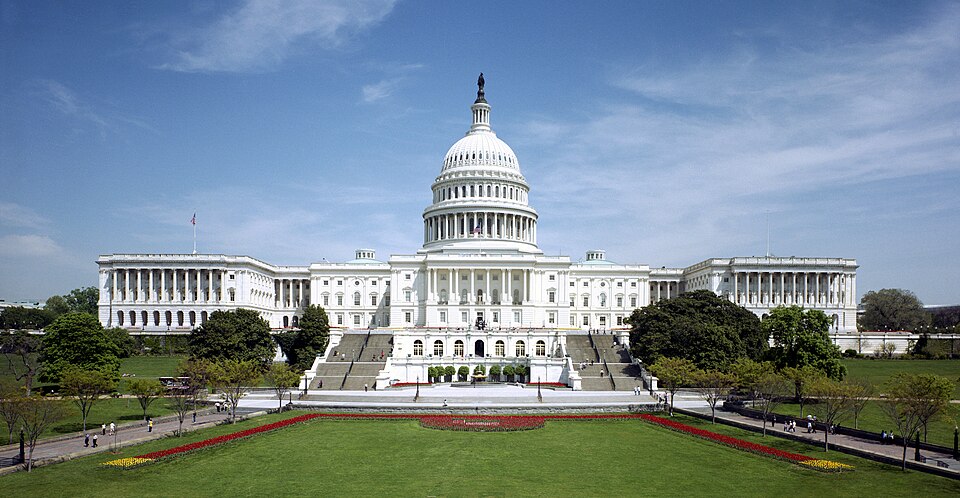
Russia Sanctions Bill Moves to the House (10 August 2026): 500% on Russian Goods, 100% on the Buyers — and Five Detained Tankers Are the Channel That Is Already Live
Three days after the Senate passed the Lindsey O. Graham Sanctioning Russia and Iran Act of 2026 by 86 votes to 11, an identical House companion was introduced on 10 August — filed during the August recess, by Republicans Michael McCaul and Brian Fitzpatrick, Democrat Steny Hoyer and a bipartisan group of cosponsors. That clears the first gate's paperwork, not the gate itself: the House does not return until September. Two things about the bill are now clearer than they were on the day of the Senate vote. It runs two tariff tracks, not one — up to 500% on goods imported directly from Russia, and up to 100% on goods from the countries that buy the most Russian energy — and the fight that decides how much of it binds is a fight over how many countries the President may aim it at. Meanwhile the part of the policy that is already operating physically has nothing to do with tariffs: five tankers carrying Russian oil have been detained by EU states and Britain this year, and on 12 August President Vladimir Putin said Russia would respond in kind.
The distinction between the tariff track and the enforcement track is worth more than a view on whether the bill becomes law, because they run on completely different clocks. One is conditional on a House calendar, a signature and a 30-day statutory window. The other is happening now, one vessel at a time, and it is the one currently attached to a freight rate. The original point of this note stands underneath both: the previous attempt at exactly this instrument left no mark on the flow data, because the United States has already imposed a 25% tariff on India explicitly tied to Russian oil purchases, removed it, and watched Russian imports set records afterwards.
- Updated 14 August: an identical House companion was filed on 10 August 2026, during recess, by McCaul, Fitzpatrick, Hoyer and a bipartisan group. It is still not law — the House returns in September, and a companion bill is a starting line, not a vote.
- 86-11 on 7 August 2026. The Senate passed the 61-page Lindsey O. Graham Sanctioning Russia and Iran Act of 2026. It also extends Iran sanctions authority through 2031.
- Two tariff tracks, not one. Up to 500% on goods imported directly from Russia — oil, gas, petroleum products, coal — stacked on existing duties; and up to 100% on countries among the five largest importers of Russian crude or gas by volume. Both are ceilings, not rates, and the second applies to new purchases after a 30-day clock that starts at enactment.
- The House fight is about scope, not principle. Hoyer has pointed to a proposal capping the tariff authority at eight nations. How wide the delegation runs is the variable that decides how much of this reaches a price.
- The enforcement track is already live. EU states and Britain have detained five tankers carrying Russian oil since January. On 12 August Putin said Moscow would respond "in kind" — the quotes and the vessel counts are below.
- The sanctions are the mandatory part. Designations on Russian officials, oligarchs, financial institutions and the shadow fleet are written as measures the President is directed to impose; a waiver requires a written national-interest certification to Congress plus a report.
- The flow went the other way. India imported a record 2.8m b/d of Russian crude in July 2026 — 55.5% of just over 5m b/d of total imports — against under 100,000 b/d in 2021.
- The discount is the pull: Urals averaged USD 60.22 in July, a 26% discount to Brent worth about USD 21 a barrel, against a price cap of USD 44.10 in force since February 2026.
- Different balance sheets. Roughly USD 21bn a year of discount capture sits with refiners; the tariff would land on USD 103.8bn of US-bound Indian goods (2025, USTR) and USD 308.4bn from China — a figure already down 29.7% in a year.
- The instrument has been tested. A 25% India tariff tied to Russian oil ran from August 2025 until it was removed effective 7 February 2026, with refunds. Imports then hit records.
- See how the commodity, rate and risk factors are scoring the majors right now on the live meter.
What actually happened: the House companion, filed during a recess
On 10 August 2026 the House introduced its companion to the Senate bill — legislation identical to the measure that passed 86-11 three days earlier. The filing is notable mainly for its timing: the House is in its August recess, and introducing a bill during one is a way of fixing a text in place before the arguments start. The lead sponsors are Representatives Michael McCaul of Texas and Brian Fitzpatrick of Pennsylvania, both Republicans, and Steny Hoyer of Maryland, a Democrat, with a bipartisan group of original cosponsors including Joe Wilson, Don Bacon, Mike Rogers, Mike Turner, Ann Wagner, Andy Barr and Nathaniel Moran on the Republican side and Marcy Kaptur, Jake Auchincloss, Jill Tokuda, Gabe Vasquez, Josh Gottheimer, Ed Case, Eugene Vindman and Chrissy Houlahan on the Democratic side. (Reporting: RFE/RL, Kyiv Post.)
Two details in that reporting change the shape of the mechanism described below, and both are worth stating precisely.
The first is that the bill runs two tariff tracks, which most coverage — including the first version of this note — collapses into one. Track one authorises duties of up to 500% on goods imported directly from Russia, explicitly including oil, natural gas, petroleum products and coal, on top of existing US tariffs and charges. Track two authorises duties of up to 100% on imports from countries that rank among the five largest importers of Russian crude or gas, or among the five leading facilitators of oil-sanctions evasion. The 500% figure did not disappear between the 2025 draft and this bill; it moved. It used to be a floor aimed at third countries and it is now a ceiling aimed at Russian-origin goods — a category the United States barely imports any more, which is precisely why the 100% track is the one with a real transmission channel.
The second is that the argument now visible in the House is not whether to sanction, but how wide the delegated tariff power should run. Hoyer, while backing the bill, pointed to a proposal limiting that authority to eight nations whose imports finance the war, and noted the package omits provisions from the Ukraine Support Act including USD 8bn in military and reconstruction assistance. Senior House aides told RFE/RL the immediate problem is holding the coalition that produced an 86-11 margin together without reopening the whole text. Fitzpatrick described the bill's targets as "oil, money, and the willingness of others to look the other way."
For a reader, the useful translation is this: an eight-country cap and an uncapped authority are the same bill with very different market consequences. A named, bounded list is a schedule that importers, refiners and exporters can plan around. An open authority is a standing option held by the executive, and options are priced differently from schedules — they attach a persistent risk premium rather than a one-off adjustment. Which of the two emerges from the House is the single most informative thing to watch in September.
What the Senate actually passed
The vote was 86-11 on Friday 7 August 2026, after a deal announced on 28 July by a bipartisan group of senators. The bill was renamed for Senator Lindsey Graham, its principal proponent, who died in July 2026. At Presidential request it also extends sanctions authority directed at Iran's weapons and energy sectors. (Coverage: Al Jazeera, NBC News; the bill is S.5025.)
Senate Majority Leader John Thune described the intent on the floor: "as long as Putin has Russian oil and gas money, he's able to continue this war. And what this sanctions bill would do would basically cut that off." A group of Democrats and Senator Rand Paul voted against, on the stated grounds that the bill hands the executive too much tariff authority. Both of those are facts about the legislative record; neither is a market input on its own. What is a market input is the structure, and it has three distinct layers that are routinely collapsed into one in headlines.
The sanctions layer is mandatory in form. Designations covering Russian officials, oligarchs and their family members, financial institutions and the shadow-fleet network are written as measures the President is directed to impose within 30 days of enactment, with waivers conditioned on a written national-interest certification to Congress and an accompanying report. The codification layer is the quiet one: writing existing executive-order designations into statute removes the option of reversing them by executive action alone. The tariff layer is the part with a market channel wide enough to reach an oil price — and it is the least automatic of the three.
The gates between the vote and a tariff
Five things have to happen in sequence. None of them is hidden, which is the useful part.
The 30-day window and the "new purchases" test together mean the bill does not penalise the record July cargoes, or anything bought before the clock starts. It creates a forward-looking condition. That is a very different object from a tariff schedule that applies on a fixed date, and it is why the market has not treated the Senate vote as a supply event.
Who the "top five" are — and why the definition is the fight
The tariff test keys off the five largest importers of Russian crude or gas by volume. Most coverage ranks buyers by value, and the two lists are not the same. On value, the Centre for Research on Energy and Clean Air's July 2026 monthly analysis put China at EUR 7.7bn of Russian fossil-fuel purchases — 43% of the top five's total, of which EUR 5.4bn was crude — India at EUR 6.4bn, Turkey at EUR 1.8bn and the EU as a bloc at EUR 1.5bn. On crude volumes, reporting on the bill has listed the five largest purchasers as China, India, Slovakia, Hungary and Azerbaijan.
| Measure | Ranking it produces | Why it matters for the tariff test |
|---|---|---|
| Value, all fossil fuels (July 2026) | China EUR 7.7bn, India EUR 6.4bn, Turkey EUR 1.8bn, EU EUR 1.5bn | The list most headlines use — but not the statutory test |
| Crude volume | China, India, Slovakia, Hungary, Azerbaijan | Puts two EU member states inside the five |
| Gas carve-out | Under 15% of Russia's annual gas exports, plus reducing | Designed to shield European economies still transitioning |
| Transit exemption | Non-Russian oil crossing Russian territory | Separates Kazakh-origin barrels from Russian ones |
Two things follow. First, whether the operative unit is the member state or the bloc changes the identity of the countries exposed, and tariffing an EU member state over pipeline crude is a materially different act from tariffing India over seaborne cargoes. Second, the carve-outs are drafted around a transition test — reducing dependence — rather than a purchase test, so a country's direction of travel matters as much as its level.
The instrument has already been tested once
This is not a hypothetical mechanism. An additional 25% duty on Indian goods, imposed under Executive Order 14329 and explicitly tied to Russian oil purchases, took effect in late August 2025 and stacked on top of existing reciprocal tariffs. A Presidential executive order dated 6 February 2026 removed it, effective 12:01 a.m. EST on 7 February 2026, with Customs and Border Protection processing refunds for entries that had paid it.
What happened to the flow across that period is the closest thing to a controlled test available:
| Period | Russian crude to India | Share of India's imports |
|---|---|---|
| 2021 (pre-invasion) | Under 100,000 b/d | About 2.5% |
| 2022 | About 740,000 b/d | Rising |
| 2023 | Nearly 1.8m b/d | About 39% |
| 2024 average | About 1.8m b/d | — |
| June 2026 | About 2.6m b/d | Over half |
| July 2026 | Record 2.8m b/d | 55.5% of just over 5m b/d |
Volumes rose through the tariff and kept rising after it was lifted, reaching consecutive records in mid-2026. That does not prove a secondary tariff can never change behaviour — the 25% rate was a quarter of the new ceiling, and it coexisted with a negotiation. It does establish that the elasticity is low enough that the flow data is the thing to watch, not the announcement. The legal backdrop to that removal, and the refund pool it created, is set out in our note on the tariff-refund quarter.
There is a second reason volumes are sticky, and it has nothing to do with price. Russian barrels reach India without crossing the Strait of Hormuz. With Gulf transits and freight in crisis — the subject of our Hormuz freight note — a non-Gulf supply line is a hedge against chokepoint risk, not merely a cheap barrel. Kpler's Sumit Ritolia describes Russian crude as having become an important supply hedge for Indian refiners, reducing exposure to disruption along traditional Middle Eastern routes.
Why a tight market weakens the lever
The uncomfortable arithmetic for the policy is that its success and its cost run through the same variable. If purchases fell materially, the barrels have to be replaced from a global pool where spare production capacity is limited and Hormuz risk is unresolved. Ritolia puts the sequence in the right order: the first question is not whether Russian barrels can be redirected to other buyers, but whether sufficient alternative supplies exist to replace them without further tightening the global market. A rapid curtailment "could therefore tighten global oil balances and put upward pressure on crude prices."
This is why the original architecture was a price cap rather than an embargo. The design intent was to keep Russian oil flowing while capping the revenue per barrel, precisely because removing millions of barrels a day would have raised the price of every remaining barrel. CREA's July figures show how partial that revenue squeeze has been in practice: Russian fossil-fuel export earnings fell 12% month-on-month to EUR 683m a day, but crude revenue actually rose 1% to EUR 392m a day, with seaborne receipts up 7% while pipeline earnings fell 21%. Sanctioned shadow tankers carried 53% of seaborne crude, and 46 false-flagged vessels were operating at month-end. The pressure that did bite fell on refined products, where loadings dropped 23% to 4.7 million tonnes — the lowest on record, against 9.6 million tonnes in July 2025.
The track that is already running: five tankers, and a threat to respond in kind
While the tariff layer waits on a House calendar, the shadow-fleet layer is being enforced physically, and that is where the last week actually produced events. In July the European Union adopted, as part of its 21st sanctions package, a mechanism allowing member states not merely to detain but to confiscate and sell Russian oil carried aboard shadow-fleet vessels evading its sanctions; the measure also covers grain cargoes. Detentions since January, as catalogued by The Moscow Times:
| Vessel | Detaining state | Date | Status |
|---|---|---|---|
| Smyrtos | United Kingdom | 14 June 2026 | Held; 100,000 tonnes of oil aboard |
| MV South Star | EU operation | 20 July 2026 | Stopped |
| Grinch, Deyna, Tagor | France | 2026 | Intercepted, later released |
| Caffa (dry cargo) | Sweden | March 2026 | Supreme Court ruled in August it be handed to Ukraine |
On Wednesday 12 August, speaking aboard the missile cruiser Varyag during a Pacific naval exercise, President Vladimir Putin said the detentions breached international maritime law. "It's nothing but piracy and robbery," he said. "If this is done, we will be forced to respond in kind." He added that any Russian response would not necessarily come in the same waters, and could fall "in any area where we see it as necessary and appropriate", including the Pacific. Pacific Fleet commander Admiral Viktor Liina told him the navy was ready to begin inspections of commercial ships serving "unfriendly nations": "We have enough assets for inspection and detention of vessels of the unfriendly nations and their shadow fleet. We are ready to start performing the task." (Wire report: The Associated Press.) Liina's briefing put numbers on the exposure he was describing: 1,001 vessels transited Russia's exclusive economic zone along the Kuril Islands between 24 April and 6 August, of which 379 flew the flags of countries Moscow designates unfriendly — 273 dry bulk carriers and 71 tankers, including 26 British and nine French.
What it touches
Start with what it does not currently touch. On the EIA's daily Brent spot series, the price was USD 87.62 on 7 August — the day of the Senate vote — and USD 92.74 and USD 93.26 on 10 and 11 August, the most recent days published. It is tempting to read USD 5.64 of that as the bill arriving in the price. It almost certainly is not. The same days carried the Strait of Hormuz — transit counts, freight rates and a deadlocked negotiation — plus the shipping-seizure escalation above, and both of those act on freight and insurance, which is the fast channel. A bill through one chamber, with a recess in front of it and a 30-day clock that has not started, is not a priced supply event. That is the honest read, and it is also why the observables below matter more than the headline.
Three channels are worth separating. The crude channel is the one everyone watches, and it is conditional on gates that have not cleared. The refined-products channel is where the existing sanctions are already visibly working, and diesel is where a barrel becomes a consumer price — which makes it a headline-inflation input in Europe long before it is an FX story. The currency channel is the slowest of the three: an oil move reaches the eight majors through the commodity factor for net exporters and through the rate factor when it changes an inflation path, and those two frequently cancel. That is exactly what happened to the loonie during the Hormuz episode, and the same logic applies here — see the CAD factor page and the USD factor page, and the earlier OPEC+ and oil note for how a large crude move can arrive at a currency almost fully attenuated.
For India specifically, the channel that a trader can reason about is not the tariff but the import bill. Ritolia notes that a forced switch would raise procurement costs, widen pressure on the current account and raise energy-security concerns — a terms-of-trade shock to an oil importer, which is a different animal from a tariff shock to an exporter.
What would change the picture
Seven observables, in the order they can move:
- The scope of the tariff authority. The companion text filed on 10 August is identical to the Senate's, so the informative event is what the House does to it in September — specifically whether the eight-nation cap Hoyer pointed to survives into the text. A bounded list is a schedule; an open authority is a standing option. They price differently.
- The House calendar itself. No floor action before the House returns. Whether the bill is taken up unchanged, amended, or left is the first real information.
- Reciprocal inspections. Whether the stated readiness to inspect and detain vessels of "unfriendly nations" produces an actual interception — and where — is the observable that moves war-risk premiums, and it needs no legislation at all.
- The 30-day clock. It starts at enactment, not at passage. Until it starts, nothing in the tariff layer can bind.
- Monthly volumes. Kpler's India and China series are the direct test of whether anticipation alone changes buying — the record 2.8m b/d in July is the baseline.
- The Urals discount. At 26% and about USD 21 a barrel it is wide enough to compensate for considerable inconvenience. A narrowing discount would weaken the pull without any policy change at all; the EIA's Russia country analysis and the monthly export trackers are where that shows up.
- Waiver certifications. Because a waiver requires a written national-interest certification to Congress, the executive's intent becomes a documented event rather than an inference.
None of that requires a forecast. It requires knowing which gate the story is standing at — and right now it is standing at the first one, with the paperwork filed and the vote still unscheduled, while a second and entirely separate track runs on the water without waiting for any of it. If you want the framework this sits inside, the about page sets out how the five factors are used.
Educational macro context only — not investment advice.
Frequently asked
What does the Russia sanctions bill do?
Which countries would face the 100% tariffs?
When could the Russia sanctions tariffs take effect?
Will India stop buying Russian oil?
Would the Russia sanctions bill push oil prices higher?
Related reading
 Markets
The 100% Pharma Tariff Is 15% Where It Counts (August 2026): Section 232 Went Live on 31 July — What It Means for the Franc and the Euro
The 100% Section 232 pharma tariff took effect 31 July 2026 — but the EU and Switzerland are capped at 15% and…
1 Aug · 12 minCurrenciesThe 50% Canada Tariffs Landed (22 August 2026): $20bn Taxed, Talks Suspended — and a Loonie That Rallied Into the Collapse
Talks collapsed Friday night; the 50% duties hit $20bn of Canadian goods on 22 August and Canada retaliates 8 …
3 Jul · 30 min Fundamentals
Bank of England Financial Stability Report Revisited (August 2026): The AI Debt the FPC Called 'Modest' Now Carries a $370bn Estimate — and What It Means for the Pound
The BoE called AI debt financing 'modest' in July 2026. Five weeks on, BofA puts $370bn on one chip-financing …
8 Jul · 14 min