
188,000 Barrels Added, 5.5 Million Shut In: The OPEC+ Meeting of 6 September 2026 — and Why the Quota Stopped Setting the Oil Price
OPEC+ meets 6 September to set October quotas. Delegates expect a hold — and with 5.5 mb/d shut in, the quota is no longer what sets the barrel.
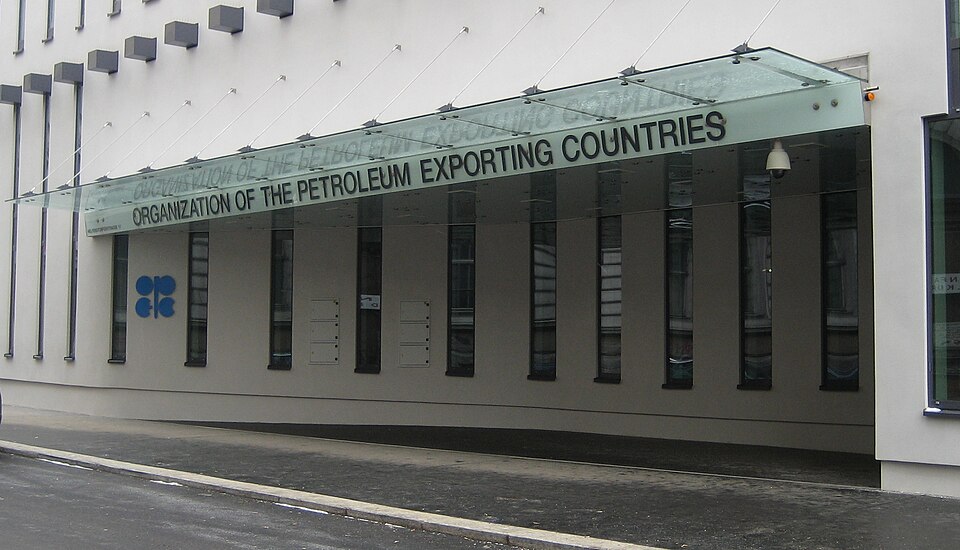
188,000 Barrels Added, 5.5 Million Shut In: The OPEC+ Meeting of 6 September 2026 — and Why the Quota Stopped Setting the Oil Price
Seven producers meet by video on Sunday 6 September 2026 to set October production levels, and the expected answer is nothing. The 188,000 barrels a day they added for September completed the phased reversal of the 1.65 million b/d of voluntary cuts agreed in 2023 — the sixth straight monthly increase, and the last one that tranche had left — and delegates have since told Bloomberg the group expects to hold quotas steady through the rest of the year. The number worth carrying into the meeting is not the one they will vote on. It is 5.5 mb/d, the EIA's estimate of regional production shut in during July, roughly twenty-nine times the size of the increase the group just approved.
That ratio is the mechanism this piece is about. For most of the last decade an OPEC+ meeting was a supply event, because a change in the quota was a change in the barrels that reached the market. In 2026 the quota and the barrels have come apart, and understanding why is more useful than guessing what the seven will announce on Sunday.
- The meeting is Sunday 6 September 2026, and it sets October levels for seven countries — Saudi Arabia, Russia, Iraq, Kuwait, Kazakhstan, Algeria and Oman — per the group's own 2 August statement.
- The tranche is finished. September's 188,000 b/d completed the phased reversal of the 1.65 mb/d of voluntary cuts introduced in April 2023 — the sixth consecutive monthly rise, per CNBC.
- The expected decision is a hold. Delegates told Bloomberg the group expects steady quotas for the rest of 2026; Rystad Energy's Jorge Leon said that having completed the restoration campaign, OPEC+ has little incentive to rush into further supply changes.
- What binds is a strait, not a ceiling. The EIA assesses shut-ins averaged 5.5 mb/d in July, with Hormuz liquids flows of 4.9 mb/d in 2Q26 against 21.6 mb/d in 4Q25.
- The group is one member smaller. The UAE left OPEC effective 1 May 2026 after 59 years, taking 3.4 mb/d of 2025 production and 4.2 mb/d of effective capacity with it — cutting OPEC's share of world crude output from 35% to 31% on 2025 figures.
- Inventories are doing the pricing. Global stocks fell an average 4.2 mb/d in 2Q26 and are forecast to fall a further 3.8 mb/d in 3Q26; US commercial crude is expected to stay below its five-year low through year-end.
- Roughly 2 mb/d of older cuts remain. The 2022-vintage group-wide layer is expected to stay in place through the end of 2026 — touching it early would be the actual surprise.
- Commodities is one of the five factors the meter scores across the eight majors. See where they currently sit →
What the 6 September meeting actually decides
It decides one month of national production targets, and nothing else.
That is worth stating plainly, because OPEC's calendar contains several different meetings that get reported with the same shorthand. The full OPEC Conference sets policy for the organisation. The wider OPEC+ ministerial handles the Declaration of Cooperation and the required production baselines that govern the following year. The Joint Ministerial Monitoring Committee reviews conformity. What convenes on Sunday is none of those: it is the group of producers that operate the voluntary-adjustment mechanism, meeting monthly, deciding a single number for October.
The group's statement after 2 August confirmed the date and said the participating countries would continue to hold monthly meetings to review market conditions. It also carried a line that matters more than the headline increase. The measure would provide, in OPEC's words, "an opportunity for the participating countries to accelerate their compensation" — the schedule under which members that produced above their allocation in earlier periods owe those barrels back.
The table the meeting is working from
Here is where the seven sit after the September adjustment, in required production levels rather than actual output.
| Country | September target (mb/d) | Change for September |
|---|---|---|
| Saudi Arabia | 10.40 | +62,000 b/d |
| Russia | 9.94 | +62,000 b/d |
| Iraq | 4.43 | +26,000 b/d |
| Kuwait | 2.67 | +16,000 b/d |
| Kazakhstan | 1.62 | +10,000 b/d |
| Algeria | 1.01 | +6,000 b/d |
| Oman | 0.841 | +5,000 b/d |
Required production levels for September 2026, per The National. These are entitlements, not production.
Read the right-hand column and the scale of the decision becomes clear. Oman's contribution to the September increase is 5,000 barrels a day. Algeria's is 6,000. These are rounding errors against a global market of roughly 100 million b/d, and they are the output of a meeting the wires cover as a supply event.
Read the middle column and a second gap opens. Saudi Arabia's entitlement is 10.4 mb/d; the EIA put actual Saudi crude production at 9.3 mb/d in 2025, against an estimated 11.6 mb/d of effective capacity. Russia's entitlement is 9.94 mb/d; Oil and Gas Journal reports it has been producing near 9 million b/d, with Ukrainian drone strikes on energy infrastructure cited as the constraint. In both cases the ceiling sits above what the country is delivering today, which is another way of saying the ceiling is not doing any work.
Why the quota stopped setting the price
A quota is permission to produce. It becomes supply only if the barrel can find a route to a buyer, and in 2026 that is the step that has been failing.
The EIA estimates that crude oil and petroleum liquids transported through the Strait of Hormuz averaged 4.9 million b/d in the second quarter of 2026, down from 21.6 million b/d in the fourth quarter of 2025 before the conflict began. It assesses that regional production shut-ins averaged 5.5 mb/d in July, and it raised that estimate for August on the assumption that shipments would remain severely constrained. Some displaced volume found another way out: flows through the Bab el-Mandeb strait averaged 8.1 million b/d in 2Q26, up from 5.4 million b/d in 4Q25, as Saudi Arabia rerouted crude westward through its East-West pipeline to Yanbu on the Red Sea.
The consequence shows up in inventories rather than in the quota table. Global oil stocks fell by an average of 4.2 million b/d in the second quarter, the EIA forecasts a further 3.8 million b/d average draw in the third, and it expects US commercial crude to stay below its 2021–2025 five-year low through the end of 2026. That is the machinery actually setting the price. Brent traded as low as $69 a barrel on 2 July after the June memorandum of understanding between Washington and Tehran, then reached $105 on 23 July as attacks on tankers resumed. It settled near $95 on Wednesday 2 September, with WTI advancing toward $91 after a 5.2% jump the previous session — its largest one-day gain in five weeks.
The member that left, and what it took with it
The seven-country format is itself new information, and it is easy to miss because the wires still write "OPEC+".
The United Arab Emirates announced on 28 April 2026 that it was leaving OPEC effective 1 May, ending a membership that began in 1967 when Abu Dhabi joined. On EIA figures, the UAE produced an average of 3.4 million b/d of crude in 2025 and held an estimated 4.2 million b/d of effective production capacity, the third largest in the group behind Saudi Arabia and Iraq. Strip it out of the 2025 numbers and OPEC's share of world crude production falls from 35% to 31%; the wider OPEC+ share falls from about 46% to roughly 42%.
The mechanism a producer group relies on is credible withholding — the market prices the barrels the group can choose not to sell. Four percentage points of world supply moving from inside that arrangement to outside it reduces the force of every future decision, including Sunday's. It also means that one of the two producers with a working Hormuz bypass now sets its own volumes, at a time when the UAE has stated an ambition to reach 5 million b/d of capacity by 2027.
What a hold would, and would not, tell you
If the seven announce no change for October, the honest reading is narrow.
It would confirm that the group has moved from a restoration schedule to a wait, which is what delegates have already signalled and what the 2 August decision structurally implied: there was no seventh increase available from the 2023 tranche. It would leave roughly 2 million b/d of 2022-vintage cuts in place, as expected, through the end of 2026. What it would not tell you is anything about the supply reaching the market next month, because the constraint on that supply sits downstream of the decision entirely.
The corollary is the more useful test. Having spent the voluntary tranche, the only remaining ways for the group to add paper barrels are to touch the 2022 layer early or to revise the baselines that govern 2027 allocations. Either would be a change of posture rather than a scheduled step, and either would be worth reading closely — not as a price forecast, but because it would say the group had concluded that its share of the market, rather than the level of the price, was the thing now at risk.
What would actually move the picture
Hormuz throughput, and the number is currently contested.
US Energy Secretary Chris Wright told CNBC on Wednesday 2 September that more than 17 million barrels of oil transited the strait by ship on Monday, the highest since the war began in late February, and that regional exports that day exceeded pre-war levels once the Saudi and Emirati bypass pipelines are included. Preliminary Kpler ship-tracking data recorded five commodity vessels crossing that day, none of them liquid tankers — the discrepancy this site examined in the transit count after the lanes were declared clear. Official US counts have run above commercial tracker estimates throughout the conflict, and Wright has argued that government figures capture dark-running vessels that private trackers, operating without military access, do not detect.
A reader does not need to settle that dispute to use it. What matters is that the EIA's published path — flows increasing slowly from September, most shut-in production largely restored in the first quarter of 2027, Brent averaging $85 a barrel in 3Q26, $78 in 4Q26 and $69 across 2027 — rests entirely on that one series recovering. The agency's next Short-Term Energy Outlook is due on 9 September, three days after the meeting, and it will mark that assumption to whatever August and early September actually delivered. Of the two dates on this week's calendar, it is the more consequential.
Where this reaches an instrument
Carefully, and less mechanically than the textbook suggests.
The obvious channel is the petro-currency link: a higher crude price improves Canada's terms of trade, and commodities is one of the five factors the meter scores across the eight majors. But this episode has repeatedly failed to deliver that translation. The Canadian dollar has spent the summer ignoring large crude moves, for the reasons set out in the mechanics of oil and the loonie: a war premium is a global cost shock as much as a Canadian revenue gain, and the second effect works against the first through the growth and risk factors. The other channel is headline inflation, which reaches every currency through the rate expectations it feeds, and which is why an oil market held up by a chokepoint is a rates story for the dollar as much as a commodity story.
The point of a meeting preview is not to say what the barrel does next. It is to say which number to watch — and this week that number is a transit count, not a quota.
For more on how this site reads the eight currencies and what the factors mean, see about pip theory.
Educational macro context only — not investment advice.
Frequently asked
When is the next OPEC+ meeting and what does it decide?
What is OPEC+ expected to do at the September 2026 meeting?
Why has OPEC+ shrunk to seven countries?
If OPEC+ raised output six months in a row, why is oil near $95?
What is the difference between an OPEC+ quota, production and exports?
What would change the picture after the September meeting?
Related reading
 Markets
18 Million Barrels, Transponders Off (2 September 2026): Hormuz's Traffic Did Not Halve — It Went Dark, and Brent Still Closed at $95.63
US escorts moved 40 ships and 18m barrels through Hormuz on 1 September with transponders off — and Brent stil…
31 Aug · 25 minFrom 68% to 48.4% (3 September 2026): Waller Said He Could Wait One Meeting — and Friday's Jobs Report Now Lands Into a Coin Flip
Hike odds fell from 68% to 48.4% on Waller's remarks the day before August payrolls. ADP added 38,000; ISM ser…
2 Sep · 21 minBoJ Holds at 1.00% and Cuts FY2026 Inflation to 2.5% (July 2026): The 8–1 Dissent, the September Signal and What It Means for the Yen
The BoJ held at 1.00% on 31 July, trimmed FY2026 core CPI to 2.5% and warned inflation could overshoot — the h…
22 Jul · 11 min