
Kevin Warsh's Global Debut: What the New Fed Chair's 'Prices Are Too High' Means for the Dollar
In his first international appearance as Fed Chair, Kevin Warsh said prices are 'too high' and ruled out tolerating inflation above 2%. Here's the dollar read.
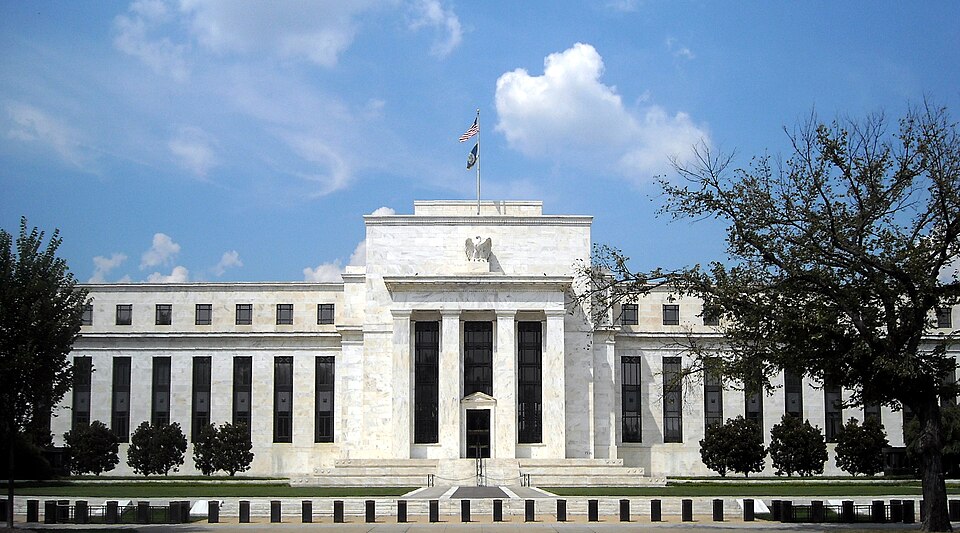
Kevin Warsh's Global Debut: What the New Fed Chair's 'Prices Are Too High' Means for the Dollar
In his first appearance on the international stage as Federal Reserve Chair, Kevin Warsh used the ECB's annual forum in Sintra, Portugal on 1 July 2026 to deliver a blunt message: "we've all looked around, and we've seen that prices are too high." He ruled out any comfort with inflation above the Fed's 2% objective, declined to pre-commit on the July rate decision, and insisted the central bank's independence "will not change." For the world's reserve currency, the substance is simple — a Fed chief leaning against inflation, not toward cuts, keeps the dollar's most important fundamental driver pointed the same way it has been all year.
A price chart will show you that the dollar firmed and that Treasury yields ticked higher as Warsh spoke. It cannot tell you why — that the move traces to a new central-bank chief re-anchoring the market's read of the US rate path. That gap between the price and the cause is the whole reason a fundamental currency-strength view beats a price-only one, and this event is a clean illustration of it.
- Warsh made his international debut as Fed Chair at the Sintra forum on 1 July 2026, alongside the ECB's Lagarde, the BoE's Bailey and the BoC's Macklem.
- His headline line — inflation is "too high," no comfort above 2% — reads hawkish and leans against near-term rate cuts.
- Interest-rate expectations are a currency's biggest fundamental lever, and one of the five factors this meter scores; a hawkish Fed is broadly dollar-supportive.
- He declined to hint at the July decision and stressed Fed independence, damping any read that policy would bend to political pressure.
- The subtler theme was a shared inflation problem across major central banks, which narrows the pure divergence trade.
- See how the interest-rate and risk factors are scoring the dollar and its peers right now on the live meter.
The setting: a new chair, a global stage
The ECB Forum on Central Banking — the Sintra gathering — is one of the few venues where the heads of the world's major central banks share a stage and speak candidly. This year's closing policy panel on 1 July put Warsh next to ECB President Christine Lagarde, Bank of England Governor Andrew Bailey and Bank of Canada Governor Tiff Macklem, in a discussion moderated by CNBC's Sara Eisen. It was Warsh's first outing before an international audience since taking the Fed chair, which is precisely why markets paid close attention to tone as much as to content. For neutral coverage, see Reuters Markets and the official ECB forum page.
Debuts matter for currencies in a way that routine speeches do not. Markets are still building a model of how a new chair thinks — how much weight he puts on inflation versus growth, how he communicates, how he handles political pressure. The first data points on all three arrived at once in Sintra, and traders repriced accordingly.
What Warsh actually said
The line that travelled fastest was about inflation. "We're all in the price stability business," Warsh told the panel. "That might not be our only business, but if there was a common thing I heard over the last couple of days, it was open-mindedness on these questions of AI, open-mindedness on productivity — but we've all looked around, and we've seen that prices are too high." He went further on the target itself: if households, businesses or markets thought the Fed would be comfortable with an inflation objective above 2%, "I guess they'd be disappointed. We're going to deliver price stability in the US."
Two things stand out. First, he declined to signal the July rate decision, going so far as to call "the conventional wisdom" his least favourite data point — a caution against assuming the outcome is baked. Second, he leaned hard on independence, pushing back on political pressure with the message that the Fed "will not change" regardless of who wants what. Coverage of the remarks is available from CNBC and PBS NewsHour.
From words to the dollar: the interest-rate channel
Here is the mechanism, stripped to its essentials. The exchange value of a currency is driven, more than by anything else, by the expected path of that country's short-term interest rates relative to its peers. Higher expected rates raise the return on holding and lending in that currency, which draws capital toward it; lower expected rates do the reverse. The interest-rate outlook is, accordingly, one of the five fundamental factors this meter scores for each of the eight majors.
Warsh did not change policy in Sintra. What he changed was the market's estimate of the policy path. By declaring inflation too high and ruling out tolerance above 2%, he nudged the implied rate path higher-for-longer — and Treasury yields responded in real time. For the dollar, that is a tailwind through the rate factor, all else equal.
This is the same channel that has driven the dollar through 2026. A run of firm US data — a PCE reading at a three-year high and resilient labour figures — had already pushed the market to price a hawkish, hike-tolerant Fed rather than the cuts once penned in for the year. Warsh's debut did not create that lean; it confirmed it from the top. For the mechanics of why a "higher-for-longer" stance supports a currency, see our note on the Fed's hawkish hold.
The subtler story: a shared inflation problem
The easy read is "hawkish Fed, buy dollars." The more accurate read is that Warsh was one of four central bankers describing the same problem. The theme of the panel was less US exceptionalism than a common predicament: prices across the advanced economies remain above target, and policymakers are reluctant to declare victory. That framing matters for the dollar, because a currency's rate advantage is always relative.
Consider the guidance debate that ran alongside it. Lagarde offered a striking mea culpa — "if I have one regret, it's to have felt bound and compelled by forward guidance" — and signalled a shift toward "framework guidance" instead. Bailey echoed the discomfort, noting how easy it is to "get locked into" forward guidance. Warsh, for his part, seemed less eager to spell out the Fed's reaction function explicitly. The upshot: several major central banks are converging on a more inflation-vigilant, less pre-committed posture at once.
Reading the cross-currency picture
The table below maps the panel's principals to the fundamental read a currency-strength view would take from Sintra. It is a snapshot of direction of lean, not a forecast — the point is to show how one event feeds several currencies through the rate channel at once.
| Central bank | Voice at Sintra | Fundamental lean from the remarks |
|---|---|---|
| Federal Reserve (USD) | Warsh: prices "too high," no comfort above 2% | Hawkish; rate path firm — supportive for the dollar |
| ECB (EUR) | Lagarde: regrets forward guidance; "framework guidance" | Still inflation-vigilant; keeps euro's cut path uncertain |
| Bank of England (GBP) | Bailey: wary of being "locked into" guidance | Cautious; no rush to signal cuts |
| Bank of Canada (CAD) | Macklem on the panel; shared inflation theme | In the same vigilant camp as peers |
The dollar's advantage, then, is real but conditional. It rests on the US rate path staying firmer than its peers' — which is a data story from here, not a speech story. That is the difference between watching a price line jump on a headline and scoring the underlying driver: the meter asks not just "did the dollar move?" but "did the rate factor actually widen in the dollar's favour, or did everyone move together?"
What a price-only view would miss
Strip away the fundamentals and all a trader sees is a firmer dollar and higher yields on 1 July. That surface reading invites two mistakes. The first is over-attributing the move to a single hawkish soundbite, when the deeper driver is a months-long repricing of the US rate path that Warsh merely reaffirmed. The second is missing the offset — that the ECB and BoE were sounding hawkish in the same breath, which caps how far the dollar's relative rate edge can widen on this news alone.
A fundamental score is built to separate those threads. It reads the interest-rate factor for each currency independently, so a synchronised hawkish shift shows up as a modest change in differentials rather than a runaway dollar. This is the same discipline we applied when the market was pricing US payrolls as the Fed's next big test, and when the ECB's own Sintra messaging reframed the euro earlier in the week.
What to watch next
Warsh's debut set the tone; the data will set the path. The near-term calendar does the heavy lifting from here: the July FOMC decision and how Warsh frames it, incoming US inflation and jobs prints, and whether the ECB (which meets on 23 July), the BoE and the BoC drift toward or away from the Fed. Each of those is a fundamental input that moves the rate and growth factors before it resolves cleanly into a price trend. Primary sources worth bookmarking: the Federal Reserve, the ECB and US inflation data from FRED.
The takeaway
Kevin Warsh's first turn on the global stage delivered exactly one durable message for currency watchers: the Fed is not done fighting inflation, and it is not reaching for the rate-cut lever. That keeps the dollar's most important fundamental driver — the expected rate path — pointed higher-for-longer. But the same forum showed the Fed is not alone in that stance, which is why the honest read is "dollar-supportive, but relative." Understand the channel, watch the differentials rather than the headlines, and the dollar's next move stops looking like a reaction to a soundbite and starts looking like a story you can track.
To learn how Pip Theory builds its fundamental currency-strength scores, see the methodology overview.
Educational macro context only — not investment advice.