
The Fed's Hawkish Hold: Why 'Higher for Longer' Is Lifting the US Dollar
The Fed held at 3.50-3.75% on 17 June but dropped its cut guidance, with 9 of 18 officials now eyeing a hike. Here's how 'higher for longer' feeds the dollar.
The Fed's Hawkish Hold: Why 'Higher for Longer' Is Lifting the US Dollar
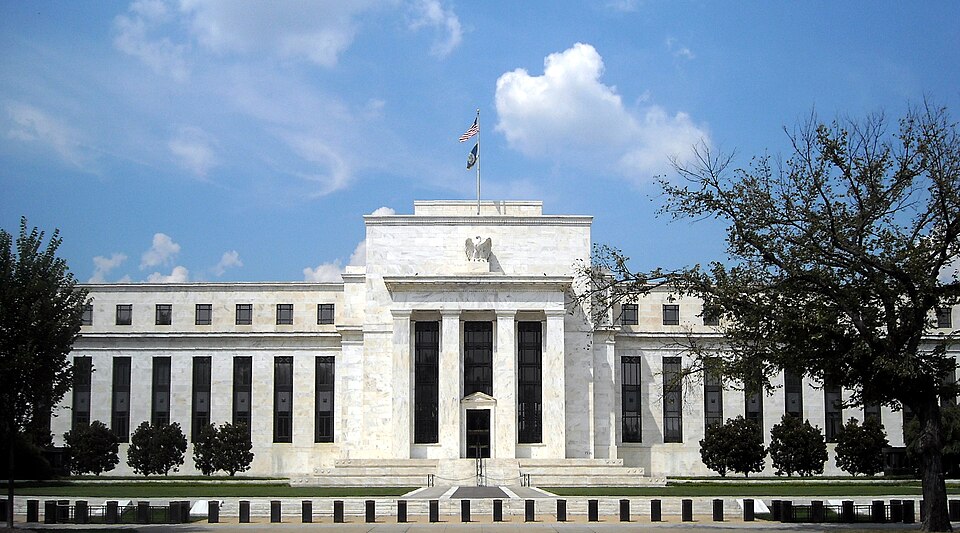
The Federal Reserve left its benchmark rate unchanged at 3.50%-3.75% on 17 June 2026 — a unanimous 12-0 vote — but the real story was underneath the headline. The Committee stripped out the language that had pointed to rate cuts as the likely next move, and 9 of its 18 officials now project at least one hike before year-end. In the first meeting chaired by Kevin Warsh, "higher for longer" went from a market hope to the Fed's base case, and the US dollar has been firming on it. This is a textbook example of how the interest-rate factor — one of the five fundamentals that move currencies — does its work.
A price chart will show you that the dollar has been strong. It cannot tell you why, or whether the strength rests on something durable. The answer here is not a single number but a shift in the expected path of US policy — and that path is precisely the kind of fundamental input a currency-strength model is built to read.
- The Fed held at 3.50%-3.75% on 17 June 2026 (12-0), but removed guidance hinting at cuts and showed 9 of 18 officials projecting a hike this year.
- It was Chair Kevin Warsh's first meeting; the median 2027 rate projection was left unchanged at 3.50%-3.75%, reinforcing a "higher for longer" message.
- Interest rates are one of the five fundamental factors. What moves a currency is less today's rate than the expected path of rates.
- The Fed's stance widens the gap with lower-rate peers — the Swiss National Bank held at 0% on 18 June — a classic tailwind for the dollar against low-yielders.
- Rates are powerful but not the whole story: growth, risk sentiment, commodities and positioning can all pull the other way.
- See how the interest-rate factor is scoring every major currency right now on the live meter.
What the Fed actually did
On the surface, 17 June was a non-event: no change to the federal funds target range, which stayed at 3.50%-3.75% for a fourth straight meeting, decided unanimously by a 12-0 vote. Markets had broadly expected a hold. Holds, though, are rarely the whole message — the guidance and the projections that accompany them often matter more than the rate decision itself.
Two things made this a hawkish hold rather than a neutral one. First, the Committee removed the forward-guidance language that had previously framed a rate cut as the most likely next step. Dropping that phrasing is a deliberate signal: the bar to easing has risen. Second, the updated Summary of Economic Projections — the "dot plot" — showed 9 of the 18 participants now expecting at least one rate hike before the end of the year, with the median projection for 2027 left unchanged at the current 3.50%-3.75% range. A committee that had been debating when to cut is now openly split on whether to hike.
It was also a notable first: the meeting was chaired by Kevin Warsh, and his debut press conference reinforced the higher-for-longer tone. For the primary record, see the FOMC statement and the Fed's projection materials. For neutral coverage of the decision, see Reuters.
Why "higher for longer" lifts the dollar
Here is the fundamental mechanism, stripped to its essentials. A currency's policy interest rate is one of the five core factors Pip Theory scores, and it works through the return on capital. When you hold assets denominated in a currency, the prevailing interest rate is a large part of what you earn on them. A higher rate — relative to other currencies — makes those assets more attractive, drawing capital in and supporting the currency, all else equal.
But the subtle and more important point is this: markets are forward-looking, so what moves a currency is rarely today's rate in isolation. It is the expected path of rates over the coming months and years. A central bank can leave its rate unchanged and still move its currency sharply, simply by changing where the market thinks rates are heading. That is exactly what happened on 17 June. By removing the cut guidance and showing a dot plot tilted toward hikes, the Fed lifted the entire expected path of US yields without touching the rate at all. The dollar's response — firming against most of its peers in the sessions that followed — is the market repricing that path.
The rate-differential channel: dollar vs. the rest
A currency never moves in a vacuum; it moves relative to something. The cleanest way to see the dollar's tailwind is to look at the gap between the Fed's stance and that of other major central banks — the interest-rate differential.
The contrast right now is stark. While the Fed holds at 3.50%-3.75% and flirts with hikes, the Swiss National Bank held its policy rate at 0% on 18 June and went further, reiterating its willingness to intervene in the foreign-exchange market to counter excessive franc strength (per the SNB). That is one of the widest rate gaps in the G10, and it is a fundamental reason the dollar carries an advantage over the franc and other low-yielders. The same logic underpins the carry trade, where investors borrow in low-rate currencies to hold higher-rate ones — a dynamic we cover in the carry trade explained.
The table below maps the channels from this single decision to the dollar.
| Fundamental factor | What the June Fed decision signaled | Dollar implication |
|---|---|---|
| Interest rates | Hold at 3.50-3.75%; cut guidance removed | Supportive — higher expected rate path |
| Rate differential | Gap vs. low-yielders (e.g. SNB at 0%) widens | Supportive vs. low-rate currencies |
| Positioning | Dot plot flips toward hikes; market reprices fewer cuts | Supportive as shorts cover, longs build |
| Risk sentiment | Higher US yields can tighten global conditions | Mixed — safe-haven bid vs. risk-off drag |
| Growth | Hikes implied only if growth/inflation hold up | Conditional on incoming US data |
Notice that four of the five channels lean the same way for the dollar after this decision — which is unusual, and is why the move has had real momentum rather than fizzling.
The repricing: positioning catches up
Rate decisions move currencies partly through a second-order effect: positioning. Heading into June, a meaningful share of the market was positioned for the Fed to cut later in the year, in line with the March projections. When the guidance flipped, those positions had to be unwound. Traders who were short the dollar in anticipation of easing were squeezed, and the adjustment itself adds fuel to the move beyond the pure rate logic.
This is the positioning factor at work — another of the five fundamentals. It explains why the dollar's reaction to a hawkish surprise is often larger than the change in rate expectations alone would justify: the price has to absorb not just the new outlook but the unwinding of bets placed on the old one. It also cuts both ways. A market that has rebuilt heavy long-dollar positions becomes vulnerable to a sharp reversal if the next data point undercuts the higher-for-longer story.
Beyond rates: the other factors still vote
It would be a mistake to read all of this as "rates up, dollar up, end of story." Interest rates are one of five factors precisely because the other four can override them. Strong US growth would reinforce the dollar; a sharp slowdown would undercut the case for hikes and pull the rate path back down. A genuine risk-off shock can hand the dollar a safe-haven bid that has nothing to do with the Fed — or, if higher US yields tighten global financial conditions too far, the resulting stress can cut against risk-sensitive flows in complicated ways. Commodity swings feed the inflation picture that the Fed is responding to in the first place.
The relationship between rates, inflation and the currency is itself layered — higher rates are partly a response to sticky inflation, and inflation has its own, sometimes opposing, effect on a currency's value, as we unpack in inflation and exchange rates. The point of a five-factor model is to hold all of these in view at once rather than fixating on the rate headline. The dollar's recent strength is real and rate-driven, but it is a balance of forces, not a one-way street. For the longer-run mechanics of how yields transmit to currencies, see bond yields and currencies.
What to watch next
The higher-for-longer narrative now has to survive contact with the data. The single biggest risk to it is inflation or labor-market figures that come in soft enough to revive the case for cuts — which would compress the very rate differential that has been lifting the dollar. Every major US data release between now and the next meeting is therefore a potential pivot point.
The next concentrated test arrives in late July, when several major central banks decide policy within days of each other. That cluster will reprice rate differentials across the board, not just for the dollar. A meter that refreshes the interest-rate factor continuously — rather than reacting after the fact to a price move — is built for exactly this kind of dense calendar. For historical context on what a sustained dollar uptrend looks like, see the strong dollar of 2022.
The takeaway
The Fed's June meeting is a clean illustration of why a fundamental currency-strength view beats a price-only one. Nothing happened to the rate itself — yet the dollar firmed, because the Committee changed the expected path of rates and the market had to reprice. That path, and the differential it creates against lower-rate currencies like the franc, is the heart of the interest-rate factor. Layer in positioning, and you have most of the story behind the dollar's recent run.
But "most" is not "all." The other four factors are always voting, and the higher-for-longer thesis is only as durable as the next inflation print. Read the drivers separately, keep them refreshed, and the dollar's moves stop looking like a mysterious line on a chart and start looking like the sum of forces you can actually name.
To learn how Pip Theory builds its fundamental currency-strength scores, see the methodology overview.
Educational macro context only — not investment advice.
Frequently asked
What did the Federal Reserve do at its June 2026 meeting?
Why does "higher for longer" tend to strengthen a currency?
Did the dollar actually rise after the decision?
How does the Fed's stance compare with other central banks?
Is the dollar's strength guaranteed to continue?
Related reading
 Fundamentals
Gold's Worst Quarter Since 2013: Why Bullion Is Falling and What It Means for the Dollar
Gold just posted its worst quarter since 2013, down ~16%. Here's why higher real yields and a hawkish Fed are …
1 Jul · 9 minCurrenciesFed Minutes: "Several" Wanted a Hike (19 August 2026) — Why the Dollar Still Fell 0.72% on a Hawkish Document
July's Fed minutes showed several participants favoured a hike and many backing one if inflation held up. The …
17 Aug · 12 minCurrenciesJune FOMC Minutes: A Hawkish, Split Fed — and Why the Dollar Barely Moved
The June FOMC minutes (out July 8) show a split committee, 'some policy firming' warranted, and the easing bia…
6 Jul · 11 min