
$104.32 to $108.48 Over One Weekend (28 September 2026): Trump Rejected Iran's Seven-Day Hormuz Plan — and Oil Took Back Friday's Drop
Brent settled at $104.32 on Friday as Iran offered to reopen Hormuz in seven days, then traded at $108.48 on Monday after the US rejected the plan. Why.
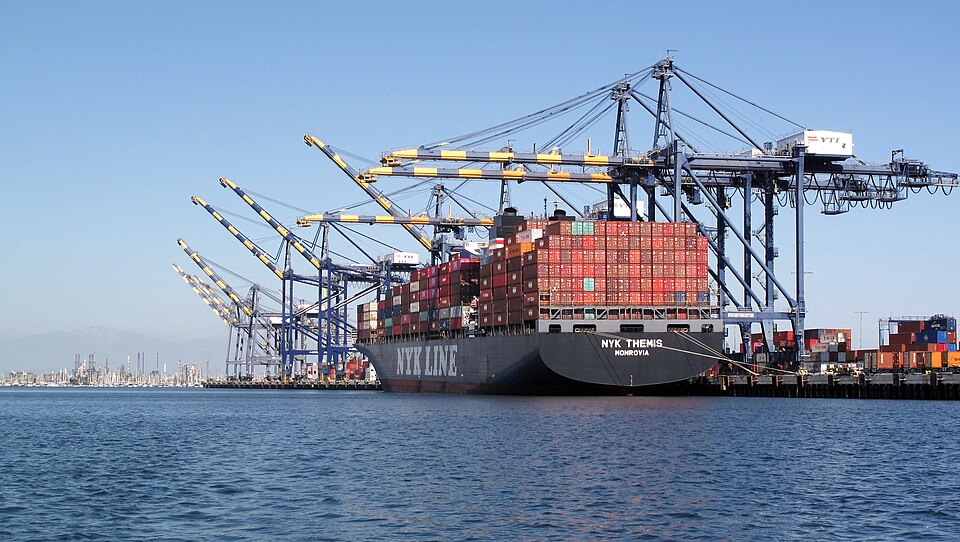
$104.32 to $108.48 Over One Weekend (28 September 2026): Trump Rejected Iran's Seven-Day Hormuz Plan — and Oil Took Back Friday's Drop
Brent crude settled at $104.32 on Friday after Iran set out a seven-day plan to reopen the Strait of Hormuz. On Saturday President Trump rejected it, telling reporters the deal "would not be acceptable". By 11:35 a.m. London time on Monday, November Brent was 4% higher at $108.48 — the highest since 15 September, and almost exactly the discount that Friday's offer had created. Not a barrel moved differently between the two prices. What changed was the date on which the market expects barrels to start moving again.
- The offer. Iran's foreign minister laid out a sequence at the UN in New York: four or five days of US steps from the June memorandum, the strait reopening around day six, talks by day seven. Conditions included lifting the naval blockade, waiving oil sanctions and releasing frozen funds.
- The discount. Brent fell 2.1% to $104.32 on Friday; WTI fell 2.3% to $92.41, per CNBC.
- The rejection. On Saturday, speaking to reporters at the White House, Trump said the deal "would not be acceptable".
- The reversal. November Brent $108.48 (+4%) and November WTI $96.16 (+4%) by 11:35 London time on Monday — Friday's drop, and a little more, back.
- Flows did not change. The move repriced a timeline, not a supply figure. JPMorgan's mid-September estimate put Middle East oil flows at 17 million barrels a day, more than 70% of the 2025 average.
- Time is the expensive variable. A market living on inventories pays more for each week of delay than it did in March.
- See how the commodity, risk and interest-rate factors are scoring the eight majors right now on the live meter.
What actually happened: four sessions, one proposal, one sentence
The sequence ran across four trading days, and the prices only make sense read in order.
On Thursday 24 September, a report that US and Iranian negotiators in New York were discussing a phased deal arrived on the same day Houthi forces fired missiles at Saudi Arabia. Brent touched $108.23 intraday and closed up 3.4% at $106.60, according to CNBC. A senior Iranian official told Reuters that the most realistic path was navigation through the strait in exchange for the end of the US naval blockade.
At the end of the week, on the sidelines of the UN General Assembly, Foreign Minister Abbas Araghchi turned that into a timeline. "If the necessary conditions are met, the strait can be reopened and normal maritime passage restored within seven days," he said, as reported by NPR, adding that the plan had been conveyed through Qatar. Brent fell 2.1% to settle at $104.32 on Friday and WTI dropped 2.3% to $92.41, per CNBC.
On Saturday, departing the White House, Trump told reporters: "I like making a deal too. But, I'm not — that deal would not be acceptable." Araghchi replied on Telegram that nothing had yet been conveyed through the mediators and that Iran "will not back down" on its conditions, Al Jazeera reported.
On Monday, November Brent traded 4% higher at $108.48 at 11:35 a.m. London time and November WTI rose 4% to $96.16, CNBC reported.
| Session | What happened | Brent | WTI |
|---|---|---|---|
| Tue 15 Sep | Last Brent settle at this level | $108.75 | — |
| Thu 24 Sep | Phased-deal report; Houthi barrage on Saudi Arabia | $106.60 (+3.4%) | $94.61 (+2.7%) |
| Fri 25 Sep | Seven-day plan set out in New York | $104.32 (−2.1%) | $92.41 (−2.3%) |
| Sat 26 Sep | Trump: deal "would not be acceptable" | market closed | market closed |
| Mon 28 Sep | 11:35 a.m. London, November contracts | $108.48 (+4%) | $96.16 (+4%) |
What the plan was actually selling
The proposal is easier to price once it is split into the two supply increments it bundled together, because they are different sizes and move on different clocks.
The first is the strait itself. Hormuz is the exit for Saudi, Emirati, Kuwaiti, Iraqi and Qatari cargoes as well as Iranian ones. With the US military escorting tankers through a route that is still being attacked, JPMorgan estimated total Middle East oil flows at 17 million barrels a day in mid-September — more than 70% of the 2025 average. Reopening restores the gap between that figure and normal, and it is the large number in the story.
The second is Iran's own exports, which the plan's conditions addressed separately: lifting the naval blockade on Iranian ports and waiving oil sanctions. That increment depends on US policy decisions rather than on navigation, and it would arrive only if both halves of the bargain held.
Why a signalled rejection still moved the price 4%
Al Jazeera reported that US officials had indicated on Friday that the proposal would be rejected. If the market knew, why did Monday move so much?
Because what Friday priced was not a reopening — it was an option on one. A plan with a date attached gives a small but specific probability that flows recover within about a week. Traders sold a slice of the war premium against that probability, and they did it cautiously, which is why the Friday loss was modest. A signal through unnamed officials narrows that option; an on-record statement from the person who has to accept the deal closes it. Monday's 4% is approximately the value of the option being withdrawn, which is why the price came back to within a few cents of where it stood before the offer existed.
This is the same logic that kept the intercepted missile over Riyadh to an 81-cent move a week earlier, run in the other direction. There, an event that sounded large changed no flows and moved little. Here, a sentence that changed no flows moved the price 4%, because it changed the expected date of recovery — and in a closed-strait market, the date is the variable that carries the value.
Why each week of delay costs more than the last
"We are living off borrowed barrels. A lot of countries are living off their inventories," Cornelia Meyer, chief executive of Meyer Resources, told CNBC on Monday.
That sentence is the mechanism behind the size of the reaction. A supply shortfall can be covered two ways: by lower consumption or by drawing on stocks. Stocks are finite and were drawn from the start of the closure, so the same one-week delay removes more of a thinner cushion in September than it did in March. The pricing consequence is that a delay is not a fixed cost; it compounds. A plan that promised recovery in seven days was worth more in week thirty than an identical plan would have been in week three, and its withdrawal costs more for the same reason.
The physical market has been showing this for weeks. Reuters reported dated Brent — the benchmark for real cargoes — at around $122 a barrel on 15 September, against a futures settle of $108.75 that day, a gap covered in the note on Aramco's pipeline bypass. When real cargoes command a premium over the screen, the shortage is in specific barrels in specific places, and that is precisely the gap a reopened strait would close first.
Brent and WTI are telling slightly different stories
One detail in the week's numbers deserves care. On CNBC's figures, Brent finished last week roughly flat while US crude fell 7.9%, leaving November WTI about $12 below November Brent on Monday.
Some of that is geography: WTI is priced in Cushing, Oklahoma, a long way from the chokepoint, while Brent is the benchmark Gulf-linked barrels compete against. But some of it is calendar mechanics. The October WTI contract expired early last week, and the front-month quote switched to November, which in a market this tightly supplied typically trades below the month before it. Weekly WTI changes spanning an expiry overstate how much US crude actually weakened, so the spread is best read as a direction rather than a precise number. November Brent itself expires on Wednesday 30 September, and the same caveat will apply to its quotes from Thursday.
Where the currency side picks this up
The currency channel runs through the level of oil rather than through a weekend's round trip. A sustained move in crude shifts the terms of trade between energy exporters and energy importers, which is why commodities is one of the five factors the meter scores for each of the eight majors — the method is described on the about page. A move from $104 to $108 inside a range Brent has occupied for most of September does not change that picture by itself. The Canadian dollar case responds to the level and the trend, as the note on oil and the Canadian dollar sets out, and the yen carries the mirror image as a near-total energy importer.
The sharper channel this week is inflation. The Federal Reserve raised rates to 3.75–4.00% on 16 September, the 10-year Treasury touched 5.23% on 25 September, and year-ahead inflation expectations in the University of Michigan survey rose to 4.6% in September. An oil price that holds above $100 into the August PCE report on 30 September and the jobs report on 2 October feeds directly into the expectations the rates factor for the dollar is already responding to. The weekend's news did not start that channel; it removed one of the few scheduled events that could have eased it.
What would change the picture
Three things are observable from here, and none of them is a forecast.
The mediated reply. Araghchi said Iran is waiting for "definitive" views conveyed through mediators and will decide on that basis. A formal counter-proposal, from either side, would restore a timeline the market has just priced out — and Friday showed what a timeline is worth: roughly 2%.
The flow number. JPMorgan's 17 million barrels a day is the figure that measures supply. Changes in rhetoric move the probability of recovery; changes in that number move the supply itself, and those are different kinds of price move with different durability.
The physical premium. If dated Brent's premium over futures narrows while the strait stays shut, stocks or rerouting are easing the cargo shortage. If it widens, the delay is biting harder than the screen shows.
What none of this supports is a view on where oil goes next. The narrower summary: a market that had sold a small slice of its war premium against a seven-day plan bought it back when the plan was rejected on the record — and paid a little extra, because every week of waiting now costs more than the one before.
Educational macro context only — not investment advice.
Frequently asked
Why are oil prices up on 28 September 2026?
What did Iran's seven-day Hormuz proposal actually offer?
Why did oil rise if officials had signalled the rejection in advance?
What does the Hormuz rejection mean for the Canadian dollar and the yen?
What would change the oil picture from here?
Related reading
 Markets
$60bn of Purchases, $4bn of Warrants (8 September 2026): Qualcomm Paid Amazon to Become a Customer — and the Accounting Rule Sends That Cost Through Revenue
Qualcomm issued Amazon a warrant over 25m shares at $161.26 — 3.75m vested on day one. The $60bn is a vesting …
10 Sep · 10 min Markets
81 Cents for a Ballistic Missile (21 September 2026): Riyadh Was Struck at Dawn, Yanbu Was on the Target List — and Brent Opened Up 0.78%
Missiles hit Riyadh and targeted Aramco at Yanbu on 19 September. Brent opened 81 cents higher at $104.68 — 0.…
21 Sep · 12 min Markets
25.9 Million Contracts Into One Friday (18 September 2026): Triple Witching Lands Between a Fed Hike and a BoJ Hike — and Gross Notional Is the Wrong Number
The quarterly expiry lands 18 September, two days after the Fed hiked and hours after the BoJ. What actually s…
18 Sep · 11 min