
June FOMC Minutes: A Hawkish, Split Fed — and Why the Dollar Barely Moved
The June FOMC minutes (out July 8) show a split committee, 'some policy firming' warranted, and the easing bias dropped — yet the dollar barely moved. Here's why.
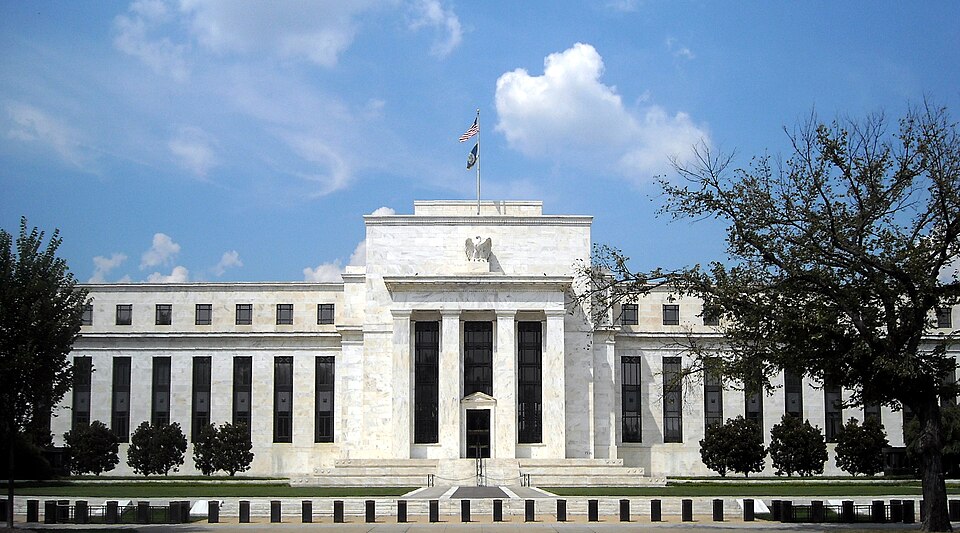
June FOMC Minutes: A Hawkish, Split Fed — and Why the Dollar Barely Moved
The minutes of the Federal Reserve's 16–17 June 2026 meeting landed on Wednesday, 8 July, and they read hawkish: most participants flagged scenarios where inflation stays elevated — from AI-driven demand, the Middle East conflict, or tariffs — and "almost all of these participants indicated that some policy firming would likely be warranted." The committee also agreed to drop the language that had suggested an easing bias. Yet the dollar barely moved. The US Dollar Index kept hovering around the 101.00 area, under mild pressure, with Treasury yields little changed. Why? Because the market had already repriced after the 2 July jobs shock — 57,000 payrolls against a consensus near 115,000 — so a three-week-old hawkish record confirmed a bias traders had discounted rather than revealing anything new.
This is a textbook example of why a fundamental, real-time read on the dollar beats reacting to any single headline — and the muted 8 July reaction is the proof. A price chart shows you that the dollar barely twitched on a hawkish record. It cannot tell you why: that the transcript is a lagging document colliding with a fresher labour-market signal, and that both are really the same thing — inputs into the expected path of interest rates, the channel that actually prices the dollar. The document is a snapshot of mid-June; the rate path is live, and it had already moved on.
- The June FOMC minutes, released 8 July 2026, showed a split committee: "many participants" saw the year-end rate within or slightly below 3.50%–3.75%, "many other participants" saw it above.
- Most participants flagged scenarios where inflation stays elevated — from AI-related demand, the Middle East conflict, or tariffs — and almost all of them judged "some policy firming would likely be warranted." The Committee also dropped its easing-bias language.
- Yet the dollar barely moved: the US Dollar Index stayed near 101.00 under mild pressure, and Treasury yields were little changed.
- The reason is timing: the 16–17 June meeting predated the 2 July jobs shock (57k payrolls vs ~115k expected, plus 74k in downward revisions), which had already cooled near-term hike bets before the minutes landed.
- So a hawkish record confirmed a bias the market had discounted — the classic gap between a lagging document and a live rate path, and the reason the reaction was muted.
- See how the interest-rate factor is scoring the dollar and its peers right now on the live meter.
What the minutes are — and why the release still matters
Every FOMC meeting produces three layers of information, released on different clocks. First comes the policy statement and, on projection meetings, the Summary of Economic Projections (SEP) — both public the moment the decision lands. Then the Chair's press conference. Finally, three weeks later, the minutes: a detailed account of the discussion, including how the range of views was distributed and what arguments carried weight.
Because the June decision (hold) and the June projections (hawkish tilt) were already known on 17 June, the minutes add no new decision. What they add is texture — the reasoning behind the dot-plot flip. Markets care about that texture because it shapes the expected path of policy from here, and it is the path, not the current level, that prices the dollar. The Fed's own schedule for these releases is published on its FOMC calendar.
June's "hawkish hold," decoded
The June meeting was a study in the difference between what a central bank does and what it signals. The action was a non-event: the target range stayed at 3.50%–3.75%, unchanged since late 2025, exactly as expected. The signal was the story. As the official FOMC statement and the accompanying projections showed, the committee's inflation forecast for 2026 was raised to around 3.6%, and the median participant's rate projection shifted to imply roughly one quarter-point increase by year-end — a striking reversal from the cuts penciled in earlier cycles. Nine officials favoured at least one hike.
One detail stood out: new Chair Kevin Warsh declined to submit a dot of his own, saying he preferred not to publish personal projections. That leaves the minutes as the best available window into how the committee — rather than its new chair — is thinking. We covered the leadership backdrop in Kevin Warsh's global debut.
What the minutes actually showed
When the record landed on 8 July, three things stood out. First, the committee was genuinely split on where rates belong. In the words of the official FOMC minutes, "many participants indicated that the appropriate level of the federal funds rate would be within or slightly below the current target range at the end of this year," while "many other participants … assessed that the appropriate level of the federal funds rate would be above the current target range at the end of this year." That is a committee pulling in two directions, not a unified march toward hikes.
Second, the hawkish tilt was explicitly conditional. Most participants "pointed to scenarios in which … inflation would remain elevated due to strong AI-related demand, the conflict in the Middle East, or the effects of tariffs," and it was in those scenarios that "almost all of these participants indicated that some policy firming would likely be warranted to return inflation to 2 percent." Only "a few participants" saw a live case for raising rates in June itself — and even they backed the hold. The hikes were an if-then, not a plan.
Third, the committee formalised the shift in stance by agreeing that the statement "would not repeat the language that had suggested an easing bias." Dropping an easing bias nudges the implied path higher-for-longer even without a hike — mildly dollar-supportive in isolation.
Then the data turned: the 57k jobs shock
Here is the twist that makes this release unusual. The June meeting concluded on 17 June. On 2 July — after the meeting, before the minutes — the June employment report landed, and it was weak. Nonfarm payrolls rose just 57,000, against a consensus near 115,000. Prior months were revised down by a combined 74,000, and the leisure-and-hospitality sector shed 61,000 jobs on soft seasonal hiring. The unemployment rate actually fell to 4.2%, but for an unflattering reason: labour-force participation dropped to 61.5%, its lowest since 2021, so the decline reflected people leaving the workforce rather than robust hiring. The Bureau of Labor Statistics publishes the full breakdown in its Employment Situation release.
The market read it as a reason to fade the Fed's hawkish tilt. Traders trimmed the odds of a near-term hike, even as the broader consensus still leaned toward no cuts in 2026. We unpacked that reaction in the June jobs shock. The upshot for the minutes: they document a committee that, in mid-June, was seriously weighing tighter policy — a stance the first hard data of the new quarter has already made look a touch stale.
The lagging document versus the live rate path
This is the heart of it. A set of minutes is, by construction, a rear-view mirror: it captures what officials thought three weeks ago, on the information they had then. The exchange rate, by contrast, is forward-looking — it discounts what the Fed is likely to do next, and it updates with every data point in between.
The dollar's reaction hinged on the distance between the hawkish record and the market's already-cooler expectations — and that distance turned out to be small. The minutes read as conditionally hawkish — "we'd firm policy if inflation stays sticky" — and the weak jobs print had already knocked out one of the conditions, so the record lost its bite. The result was a contained move: the US Dollar Index stayed pinned near the 101.00 area, drifting within its corrective range from the prior week's highs around 101.80, and Treasury yields were little changed. The currency was trading the forward path, not re-litigating the June decision — precisely the outcome a factor-based read would have flagged in advance.
How the minutes flow into the dollar: the transmission map
The table below decomposes the release into the channels that actually reach the currency, with the column on the right marking what the 8 July record actually delivered. Notice that every row routes through the same fundamental — the expected rate path — which is precisely why a factor-based read cuts through the noise.
| What the minutes could show | Fundamental channel | Directional pull on USD | Did it land? |
|---|---|---|---|
| Broad, unconditional support for hikes | Rate path shifts higher | Supportive — reinforces tightening bias | No — only "a few" saw a live case |
| Hawkishness framed as data-dependent | Rate path stays conditional | Muted — weak jobs data offsets it | Yes — the dominant read |
| Rising concern about slowing growth/jobs | Rate path flattens | Headwind — softens the hike narrative | Partial — half saw rates flat-to-lower |
| Firm inflation-fighting language | Rate path higher-for-longer | Supportive — even without a hike | Yes — easing bias dropped |
| Divisions / a split committee | Path uncertainty rises | Two-sided — depends on which side dominates | Yes — "many" vs "many other" split |
The mix that landed — conditional hawkishness plus a genuine split — is why the two supportive rows and the two softer rows roughly cancelled, leaving the dollar close to flat. This is the Pip Theory thesis in miniature. A price-only tool tells you that the dollar sat still on the 8th; it cannot tell you whether the calm came from the minutes being dull or from a hawkish record being pre-empted by cooler data. A fundamental meter that scores the interest-rate factor separately — and tracks it against growth and inflation — is built to read the driver, not just the price line. It saw the rate path reprice after the jobs shock, which is exactly what a three-week-old transcript cannot capture.
Why this matters beyond a single release
Step back and the episode illustrates a durable point about trading the dollar on fundamentals. Set-piece events — meetings, minutes, projections — get enormous attention, but they are snapshots. Between them, a steady drip of data (payrolls, inflation, retail sales) continuously re-prices the rate path. The currency follows the path, so it often responds more to the flow of data than to any single marquee document.
That is why chasing headlines is a losing game and why a fundamental score updated on a rolling basis is more useful than a once-a-meeting reaction. The interest-rate factor is not a single number frozen at the last decision; it is a live read that moves as expectations move. The June minutes are worth watching — but mainly as a benchmark against which to measure how far the live path has already travelled.
The takeaway
The June FOMC minutes are a rare case where the calendar itself makes the fundamental point: a hawkish record, written before the data turned, landed into a market that had already moved on — and the dollar barely flinched. The decision (a hold) and the projections (a hawkish tilt) were never the news; the news was what the reasoning revealed about the path from here — a split, conditional committee — and how that squared with a labour market that had just cooled sharply. Read the dollar through the rate path, not the transcript, and the muted 8 July reaction stops looking like a puzzle and starts looking like exactly what it was: a lagging document confirming a bias the live rate path had already priced.
To learn how Pip Theory builds its fundamental currency-strength scores, see the methodology overview.
Educational macro context only — not investment advice.
Frequently asked
What did the June 2026 FOMC minutes show?
What did the June FOMC meeting actually decide?
Why did the dollar barely move on hawkish minutes?
How do FOMC minutes move the US dollar?
What does dropping the easing bias mean for the dollar?
Related reading
CurrenciesFed Minutes: "Several" Wanted a Hike (19 August 2026) — Why the Dollar Still Fell 0.72% on a Hawkish Document
July's Fed minutes showed several participants favoured a hike and many backing one if inflation held up. The …
17 Aug · 12 minCurrenciesThe Fed's Hawkish Hold: Why 'Higher for Longer' Is Lifting the US Dollar
The Fed held at 3.50-3.75% on 17 June but dropped its cut guidance, with 9 of 18 officials now eyeing a hike. …
23 Jun · 9 minCurrencies29,000 Jobs and a 10-Year Up 27bp Since the Hike (Fed Minutes Preview, 7 October 2026): What to Expect and What It Means for the Dollar
The minutes of the Fed's September hike drop 7 October at 2pm ET. Since then payrolls rose just 29,000 and the…
5 Oct · 10 min