
The Three Safe Havens: Gold, the Yen and the Franc
Safe haven currencies — the Japanese yen, Swiss franc, and gold — appreciate when equity markets fall and fear spikes. Here's why each earns the label and how to use them in a macro framework.
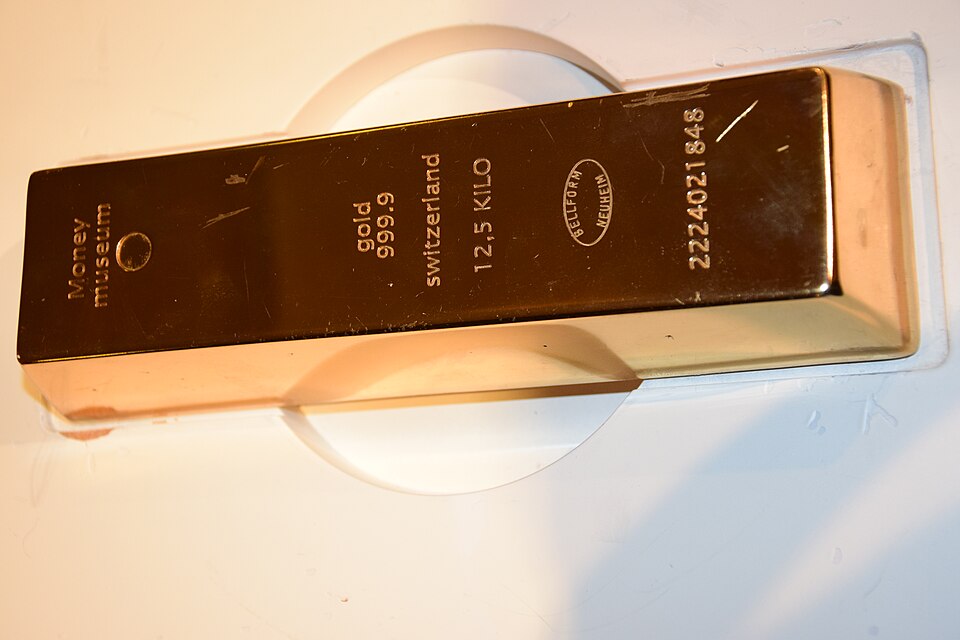
The Three Safe Havens: Gold, the Yen and the Franc
Safe haven currencies are assets that investors move into when fear takes over the markets. While the label gets applied loosely, three assets have earned it empirically over decades: the Japanese yen (JPY), the Swiss franc (CHF), and gold. Each works through a different mechanism, each has its quirks, and each tells you something different about the nature of the crisis you are watching.
- The yen's safe-haven status is driven primarily by carry-trade unwinding — Japan's net creditor position means foreign assets are sold and yen bought during crises.
- The franc's strength comes from Switzerland's political neutrality, current-account surplus, and capital-account openness — so powerful the SNB has had to defend against over-appreciation.
- Gold is the zero-credit-risk, zero-yield store of value — it thrives in inflationary stress and geopolitical shock but can temporarily sell off in liquidity crunches.
- Academic research by Ranaldo and Söderlind (2010) formally confirmed JPY and CHF appreciate when US stocks fall and volatility rises, at time horizons from hours to days.
- Track JPY and CHF macro scores live on the JPY and CHF currency pages.
What makes an asset a "safe haven"?
A true safe haven is an asset that maintains or increases its value during periods of broad financial market stress — precisely when other assets are falling. The term is often used loosely (anything not falling on a given day gets called a safe haven), but the academic definition is stricter: a safe haven is negatively correlated with risky assets during periods of high market stress, not just on average.
Angelo Ranaldo and Paul Söderlind established this formally in their landmark 2010 paper "Safe Haven Currencies", published in the Review of Finance, Vol. 14, No. 3, pp. 385–407. Examining high-frequency exchange rate data from 1993 to 2008, they found that the Swiss franc and Japanese yen appreciate against the US dollar when US stock prices fall, US bond prices rise, and FX volatility increases. Critically, these safe-haven properties materialise across different time horizons (from hours to several days) and non-linearly — they become more pronounced as volatility spikes, and they were especially strong for the yen during the 2008 financial crisis.
The Japanese yen: the world's carry-trade funding currency
The yen's safe-haven status is slightly paradoxical. Japan's domestic economy is often struggling, the Bank of Japan kept interest rates near zero or negative for decades, and Japanese equity markets can fall sharply in a crisis alongside everything else. So why does the yen go up when everything else falls?
The answer is Japan's role as the world's largest net creditor nation and the yen's unique role as the primary funding currency for global carry trades. Japanese institutions — pension funds, life insurers, banks — hold enormous stocks of foreign assets, all ultimately funded in yen. When global risk sentiment deteriorates and those positions become loss-making or too risky to hold, Japanese investors repatriate: they sell foreign assets (foreign currency) and buy yen. That repatriation flow is mechanical and large, pushing yen higher regardless of what is happening domestically.
The August 2024 yen carry unwind is the clearest recent example. The Bank for International Settlements documented in BIS Bulletin No. 90 how the Bank of Japan's unexpected 15-basis-point rate hike on 31 July 2024 — raising its policy rate from near zero to 0.25% — triggered a rapid unwinding of yen-funded carry positions. The yen surged abruptly and Japan's Nikkei 225 fell 12.4% in a single session on 5 August 2024 as the feedback loop between yen strength and margin calls cascaded through global markets.
The Swiss franc: political neutrality as a monetary asset
The Swiss franc's safe-haven status rests on a different foundation — not carry mechanics but structural capital-account attraction. Switzerland combines features that draw crisis capital: political neutrality (non-EU, non-NATO entanglements), a persistent current-account surplus, a rule-of-law judicial system with strong property rights, and a long track record of low inflation under the Swiss National Bank.
The SNB's own research confirms that a negative risk shock produces lower Swiss interest rates and a stronger franc simultaneously — the exchange rate and monetary transmission work in the same direction, unlike in most other economies. That paradox illustrates how powerful the safe-haven capital flow is: even negative rates (the SNB held its policy rate at -0.75% for years from 2015) could not deter investors from parking capital in Switzerland during crises.
The January 15, 2015 event ("Francogeddon") is the starkest illustration of pent-up safe-haven demand. The SNB had been defending a 1.20 EURCHF floor since September 2011, spending vast reserves to absorb the safe-haven inflows during the eurozone debt crisis. When it abandoned that floor, the release of three years of suppressed demand caused an instantaneous 28–30% appreciation — the largest single-day move in any major currency in modern history, according to CEPR VoxEU analysis marking its ten-year anniversary.
Gold: the zero-credit-risk store of value
Gold sits alongside but slightly apart from the two safe-haven currencies. It is not issued by any central bank, pays no interest, and has no credit counterparty. Those are weaknesses in normal times (opportunity cost is real) but become strengths in crises where trust in institutions or currencies is questioned.
Gold's safe-haven properties are most reliable during inflationary stress and geopolitical crises: episodes where investors fear currency debasement or institutional breakdown. The World Gold Council notes that gold functions as a hedge against inflation, currency risk, and systemic risk simultaneously — properties not shared by JPY or CHF, which are themselves fiat currencies with their own central banks.
Gold's Achilles heel is the liquidity crunch. During the acute phase of the 2008 financial crisis, gold briefly sold off alongside equities as institutions facing margin calls sold their most liquid assets — including gold — to raise cash. The same pattern appeared briefly in March 2020. Gold typically recovers quickly once the acute cash-demand phase passes, but traders should not assume gold is immune to the initial selling pressure in a genuine liquidity crisis.
| Crisis type | JPY | CHF | Gold |
|---|---|---|---|
| Equity sell-off | Strong | Strong | Moderate |
| Geopolitical shock | Moderate | Strong | Very strong |
| Inflation spike | Mixed | Moderate | Very strong |
| Liquidity crunch | Strong (carry unwind) | Strong | Can sell off |
Illustrative strength of safe-haven behaviour by asset class and crisis type. Based on academic literature and observed historical patterns — not a guarantee of future behaviour.
How to use the safe havens as a macro toolkit
Each safe haven tells you something specific about the nature of current stress.
| If this is rising strongly... | The market is pricing... |
|---|---|
| JPY only | Carry unwind / equity risk-off; primarily financial market stress |
| CHF only | Political or systemic risk in Europe / eurozone concern |
| Gold only | Inflationary pressure, currency debasement fear, or geopolitical event |
| All three together | Acute systemic crisis; broad loss of confidence across assets |
| JPY falling despite risk-off | BoJ policy shift undermining carry-unwind dynamic (as in 2022–23 when JPY weakened despite risk-off because BoJ held rates at zero) |
The post-2022 period offers a warning about over-relying on the yen safe-haven label. As the Bank of Japan held rates near zero while the Fed raised aggressively to combat inflation, the yen weakened significantly despite multiple risk-off episodes — interest-rate differentials overwhelmed the traditional safe-haven repatriation flow. This is why the Pip Theory meter weights both the risk-mood factor and the interest-rate differential factor separately: the risk factor measures haven demand; the rates factor captures whether that demand is being crowded out by yield differentials. See the what is a currency strength meter explainer for how those inputs are combined.
For the CHF, the key watch is whether EURCHF is approaching levels that historically trigger SNB intervention. The SNB has shown repeatedly that it will not tolerate unbounded franc appreciation — which means at extreme levels, the CHF safe-haven trade has an effective central bank cap.
Track both JPY and CHF macro scores against the full G10 ranking in real time on the live meter. For the dollar-gold relationship that often runs alongside safe-haven flows, see the dollar-gold correlation post.
Educational macro context only — not investment advice.