
Fed Minutes: "Several" Wanted a Hike (19 August 2026) — Why the Dollar Still Fell 0.72% on a Hawkish Document
July's Fed minutes showed several participants favoured a hike and many backing one if inflation held up. The dollar fell 0.72% to 98.93 anyway — here's the channel.
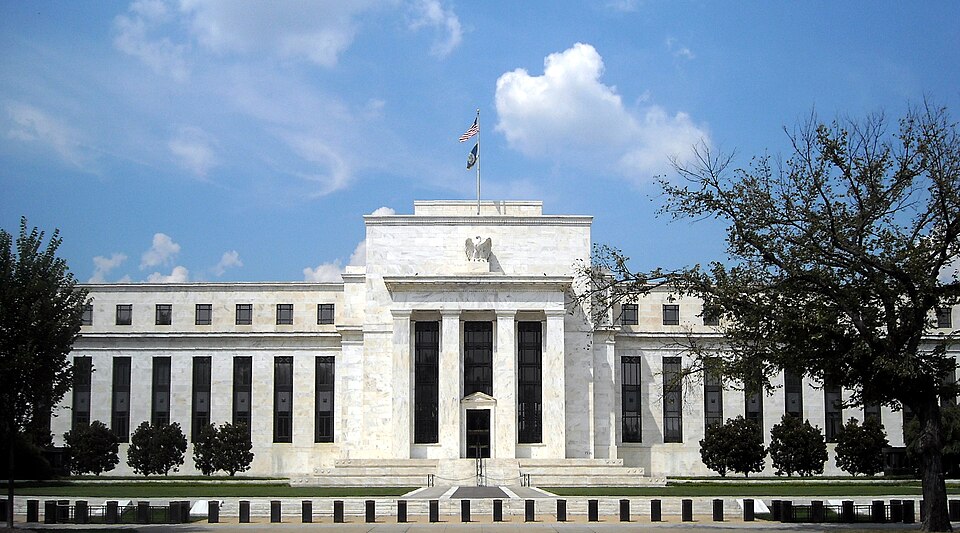
Fed Minutes: "Several" Wanted a Hike (19 August 2026) — Why the Dollar Still Fell 0.72% on a Hawkish Document
The minutes of the Federal Reserve's 28-29 July meeting landed on Wednesday 19 August at 2:00 p.m. Eastern, and they were more hawkish than the 9-3 vote suggested: "Several participants favored an increase of 25 basis points in the target range at this meeting" — more than the three who actually dissented — while "Many participants assessed that policy tightening would likely be necessary if inflation did not decline." The dollar index then fell 0.72% to 98.93, the euro reached its highest in more than two and a half months, and the 30-year yield dropped almost 10 basis points. That apparent contradiction is not a market misreading. It is the whole point of the document: the hawkishness was attached to a condition, and in the three weeks between the meeting and its publication, that condition was answered in the other direction.
This post was published as a preview two days before the release. What follows keeps the reading framework and replaces the scenarios with what the minutes actually said.
- The hike camp was "several", not three. "Most participants" backed the hold, but "several" favoured an immediate 25bp increase — so the three dissents understated the hawkish appetite in the room.
- "Many participants" backed tightening conditionally — "if inflation did not decline". That clause is doing all the work.
- The condition has since been answered. July CPI cooled to 3.4% headline and 2.5% core, and PPI was flat on the month — the benign branch of the Committee's own sentence.
- The dollar fell 0.72% to 98.93. EUR/USD +0.78% to $1.16640 (highest in over 2½ months), GBP/USD +0.48% to $1.3597, the yen 0.70% stronger at 158.48.
- The long end rallied on plumbing, not growth. Treasury said it will at least double long-end liquidity-support buybacks from $2bn to $4bn per operation from 9 September; the 30-year fell to 5.1942% from 5.311% earlier in the week.
- September pricing barely budged — roughly 65% odds of a hold, against about 31% priced for a hike before the release.
- No one argued for a cut. The only cut in the document is the Desk survey's median respondent, who sees one in early 2028.
- See how the interest-rate factor is scoring the dollar against seven other currencies on the live meter.
What actually happened: the headcount, not the vote
The Fed writes minutes in a coded dialect where vague-sounding words function as a headcount. The ladder runs from "a couple" and "a few" at the bottom through "some", "several", "many" and "most" to "almost all". A second distinction matters as much: "participants" means everyone at the table including non-voting regional presidents, while "members" means only the twelve who vote. Here is where July's discussion actually sat, in the Committee's own words from the published minutes.
| Quantifier | What the minutes attribute to it |
|---|---|
| Most participants | "supported maintaining the current target range for the federal funds rate" |
| Several participants | "favored an increase of 25 basis points in the target range at this meeting" |
| Many participants | "assessed that policy tightening would likely be necessary if inflation did not decline" |
| Some participants | "commented that financial conditions might not currently be sufficiently restrictive to facilitate a return of inflation to 2 percent" |
| A few of the hike camp | judged an immediate move "would likely help forestall the need for a steeper and potentially more costly sequence of tightening moves at a later stage" |
| Almost all members | agreed to retain the statement's declaration that the Committee "will deliver price stability" |
| Nine members / three members | voted to hold; Hammack, Kashkari and Logan preferred a quarter-point increase |
Read the first two rows together and the preview's first scenario is confirmed: the hawkish appetite was broader than the dissent count. "Several" sits above "a few" and describes a group larger than the three who put their names to a vote. The dissents were the visible edge of a wider camp, not the whole of it.
But the third row is the one that determined the price action, and it is a conditional. "Many" is higher on the ladder than "several" — so the largest identified bloc in the policy discussion was not made up of people who wanted a hike in July. It was made up of people who said they would want one if inflation did not decline. That is a reaction function, and unlike a level judgement it does not expire. It gets tested.
Why a hawkish document knocked 0.72% off the dollar
Because the test had already been run. Every judgement in the minutes was formed on or before 29 July. Four US releases have landed since, and the two that speak to the Committee's stated condition both came in on the cooling side.
| Release | Date | Result | Versus expectations |
|---|---|---|---|
| July employment report | 7 Aug | Payrolls −23,000; unemployment 4.1%; average hourly earnings +3.2% y/y | Consensus +83,000; May and June revised down a combined 103,000 |
| July CPI | 12 Aug | Headline +0.1% m/m, 3.4% y/y; core +0.2% m/m, 2.5% y/y | In line; both annual rates down 0.1pp from June |
| July PPI | 13 Aug | Final demand unchanged on the month; 4.7% y/y from 5.5% | Below the +0.2% m/m and 4.9% y/y forecasts |
| July retail sales | 14 Aug | −0.6% m/m, to $763.6bn; control group −0.4% | Consensus looked for a small gain |
Inflation declined. So the sentence that "many participants" stood behind — tightening likely necessary if inflation did not decline — describes a path the data has since made less relevant, not more. The market did not have to disbelieve the hawks to mark the dollar down; it only had to take their condition literally.
Note also what is absent. Across a long document, no participant is recorded as favouring a rate cut. The word appears once in a policy sense, and it belongs to the market rather than the Committee: "The median respondent to the Desk survey, by contrast, expected no change in the policy rate this year or the next but expected a rate cut in early 2028." A professional forecasting community pricing a multi-year hold, and a committee where several wanted to hike immediately, together describe a Fed with no easing bias whatsoever. The dollar's decline was not a dovish repricing of the Fed. It was the removal of a hawkish premium that had been built on the assumption the minutes would show something unconditional.
The long end fell for a reason that has nothing to do with the Fed
Any honest account of Wednesday has to separate two events that hit within hours of each other. The Treasury announced it is "increasing, by at least double, the size of liquidity support buyback operations for longer-dated nominal coupon securities" — the 10-to-20-year and 20-to-30-year sectors — taking the maximum from $2 billion to at least $4 billion per operation, effective 9 September and running through the refunding quarter to 4 November. Treasury framed it as a response to "consistent strong sponsorship from market participants", per its own announcement.
The 30-year yield fell almost 10 basis points to 5.1942% and the 10-year 4.56 basis points to 4.66%. Earlier in the same week the 30-year had touched 5.311%, its highest since June 2007, and the August 30-year auction cleared at 5.216% — the highest auction yield since 2001, as CNBC reported.
This matters for the currency read because a falling long yield can mean two opposite things. If it falls because growth and inflation expectations are cooling, that is a rate-differential story and mildly dollar-negative. If it falls because a large, price-insensitive buyer has just been announced, it is a supply-and-liquidity story that says nothing about the policy path at all. Wednesday was mostly the second kind. We traced the first kind in the long-end selloff that took the 30-year to 5.31% and stopped supporting the dollar — and the significance of the buyback is that it partially unwinds the fiscal-risk premium described there, which removes a bid that had been working against the dollar rather than for it.
The dollar through the five factors
Pip Theory scores eight currencies on five fundamental factors, and this release moved three of them in ways that partly offset.
The interest-rate factor is the direct channel, and the net effect was small: September pricing shifted only marginally, to roughly a 65% chance of a hold from about a 31% chance of a hike before the release. What genuinely changed is the shape of the distribution — the minutes established that a move is well supported inside the Committee under a condition that is not currently being met, which thickens the tail without shifting the centre. The growth factor got no help from a document written before payrolls turned negative; the minutes still describe labour market conditions as "stable, with labor demand and supply in balance", and record only that "a few participants noted some lingering signs of softness". That assessment predates a −23,000 print and 103,000 of downward revisions, so it carries no weight.
The risk-sentiment factor is where the offset lives. Lower long yields plus no hawkish surprise is a risk-on configuration, and it works against the dollar's haven bid at the same time as stable rate expectations leave its carry intact. That is the tension behind a 0.72% decline that showed up broadly — the euro at $1.16640, sterling at $1.3597 and its highest since 11 May, and the yen firmer at 158.48, as reported on the day. A dollar that weakens against a high-yielder and a funding currency simultaneously is usually telling you the move is about the dollar rather than about its counterparts.
What else the minutes revealed
Two threads beyond rates are worth flagging, because both are new to this set and both have market channels.
The first is that the AI buildout has become a standing item in the Fed's own risk assessment rather than a background theme. Several participants expect AI-related investment to raise productivity and potential output growth in coming years — a supply-side argument that is disinflationary if it lands. But several also named, as a downside risk, "the possibility that AI developments could disappoint, leading to a significant repricing of stocks, with consequent negative effects on consumer spending", and a few flagged the growing share of AI capital spending financed by borrowing, "including credit provided by nonbank investors or regional banks". The minutes also note that data-centre inputs such as chips and steel have seen large price increases, and that skilled trades tied to the buildout are commanding notable wage gains. That is a central bank tracking a capex cycle through three separate channels at once: inflation, financial stability, and consumption via the wealth effect.
The second is institutional. The minutes record the chair proposing that six scheduled meetings a year, "held roughly every two months, would allow more information to accumulate between meetings than under current practice". It was a discussion rather than a decision, but it is directionally consistent with a Fed that has already withdrawn written forward guidance. Fewer meetings and no guidance would place more of the burden of price discovery on the data itself — and, mechanically, more of it on documents like this one.
What comes next
The calendar tightens from here. July PCE — the Fed's preferred inflation gauge, and the direct test of the condition "many participants" named — arrives on 26 August. The Jackson Hole symposium runs 27-29 August, where Warsh delivers his first keynote as chair; in a guidance vacuum, a set-piece speech carries unusual weight. Then the FOMC meets on 15-16 September with a fresh Summary of Economic Projections, the first dot plot since June, when the Committee penciled in one quarter-point increase by year-end. Whether that dot survives contact with negative payrolls and a 2.5% core print is the actual September question.
The August employment report, due in early September, is the other half of it. The minutes tell us several officials were ready to move on the inflation side alone. They also tell us the labour market assessment that made a hold comfortable was formed before the labour market visibly cooled. Those two facts pull in opposite directions, and the data between now and mid-September decides which one governs.
The takeaway
The preview argued that this document would be traded on its conditions rather than its vote count, and that is precisely what happened — just not in the direction a hawkish headline implies. The minutes delivered a genuine hawkish surprise in breadth: "several" participants wanted an immediate quarter-point increase, more than the three who dissented, and "many" were prepared to tighten under a stated condition. Then the market read the condition, checked it against a 2.5% core CPI and a flat PPI, and marked the dollar down 0.72%.
Both things are true at once, and holding them together is the skill. This is a committee with no easing bias, a live internal case for higher rates, and a written trigger that current data does not pull. The label "hawkish" captures the first two and misses the third, which is why the label was worth less on Wednesday than a careful reading of one four-word clause. A stated condition is the most valuable thing a central bank can give you in a guidance vacuum — because it is the only part of the document that the next data release can settle.
To learn how Pip Theory builds its fundamental currency-strength scores, see the methodology overview, or track the dollar's factor breakdown on its USD page. For the earlier stages of this storyline, see the June minutes released on 8 July and the July decision itself. Source data: the FOMC minutes of 28-29 July 2026, the Federal Reserve's FOMC calendar, the Treasury buyback announcement, the BLS employment situation and producer price index, and Census Bureau retail sales.
Educational macro context only — not investment advice.
Frequently asked
What did the July 2026 FOMC minutes actually say about rate hikes?
Why did the dollar fall if the Fed minutes were hawkish?
Do the minutes make a September 2026 rate hike more likely?
What did the FOMC minutes say about AI and financial stability?
Is the Fed really considering cutting from eight meetings a year to six?
Related reading
CurrenciesConfidence Falls to 89.4 (25 August 2026): Present Situation +6.8, Expectations Down to 68.2 — and a 16 August Cut-Off That Missed the Fed Minutes and the Tariffs
US consumer confidence fell to 89.4 in August against 90.2 expected. The Present Situation rose 6.8 points whi…
27 Jul · 10 minCurrencies29,000 Jobs and a 10-Year Up 27bp Since the Hike (Fed Minutes Preview, 7 October 2026): What to Expect and What It Means for the Dollar
The minutes of the Fed's September hike drop 7 October at 2pm ET. Since then payrolls rose just 29,000 and the…
5 Oct · 10 minCore CPI 0.3% Against 0.2% Expected (11 September 2026): August Inflation Firmed on the Month and Eased on the Year — Four Days Before the Fed Decides
August core CPI rose 0.29% against a 0.2% consensus while the annual rate fell to 2.4%. The split print, the j…
9 Sep · 12 min