
Black Wednesday 1992: How Soros Broke the Bank of England
On 16 September 1992, George Soros pocketed over £1 billion shorting the pound as Britain was forced out of the ERM — the definitive case study in currency strength divergence and speculative attack.
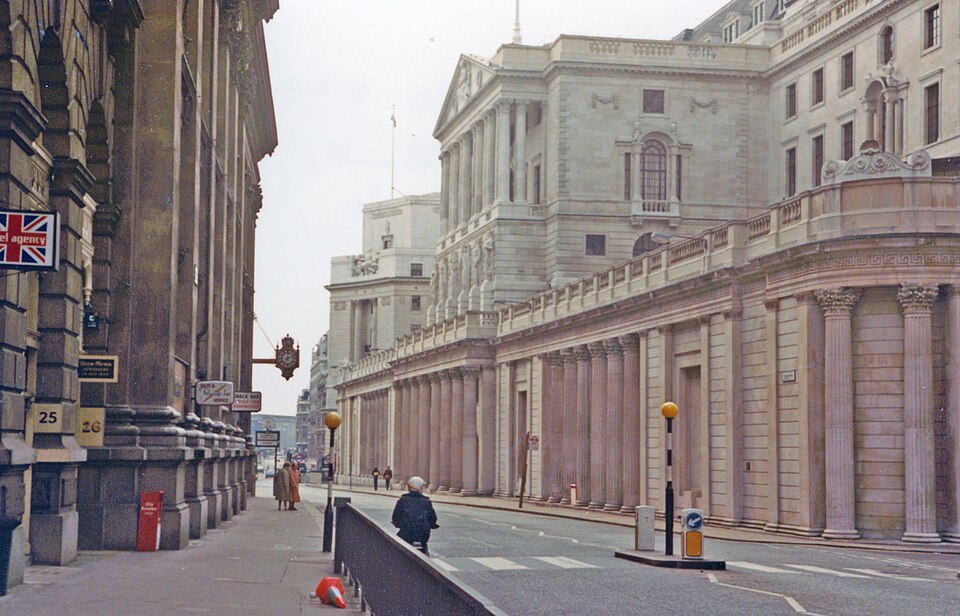
Black Wednesday 1992: How Soros Broke the Bank of England
On 16 September 1992, the British pound was forced out of the European Exchange Rate Mechanism after the Bank of England spent billions in reserves and raised interest rates to 15% — all in a single day — and still could not hold the line. The man on the other side of that trade, George Soros, pocketed over £1 billion in profit. It remains the most celebrated speculative attack in currency history, and one of the clearest real-world demonstrations of what happens when a currency's fundamental strength and its official peg diverge.
- On 16 September 1992 (Black Wednesday) the UK was forced out of the ERM after failing to defend sterling's floor against the Deutsche Mark.
- George Soros's Quantum Fund held a short position worth about $10 billion — netting over £1 billion in profit according to Wikipedia/Black Wednesday.
- The UK had entered the ERM in October 1990 at DM 2.95 per pound — a rate many economists said was overvalued.
- Interest rates were hiked from 10% to 12%, then to 15%, in the same afternoon — and reversed that same evening.
- The Treasury later put the cost of the failed defence at £3.3 billion (Freedom of Information, 2005).
What was Black Wednesday?
Black Wednesday was the day the United Kingdom's overvalued currency peg collapsed under speculative pressure. The UK had joined the European Exchange Rate Mechanism (ERM) in October 1990 at a central rate of DM 2.95 per pound, committing to keep sterling within ±2.25% of that level. By 1992, the peg was critically stressed: UK inflation was running at nearly triple the German rate, the economy was in recession following German reunification-driven interest rate rises, and the pound was drifting toward its ERM floor.
The catalyst arrived the evening of 15 September 1992, when Bundesbank president Helmut Schlesinger gave an interview to the Wall Street Journal that was picked up by the German financial paper Handelsblatt. Schlesinger indicated that "a more comprehensive realignment" of ERM currencies might be needed. Currency traders read the message clearly: sterling, like the Italian lira (devalued just days earlier), would have to fall.
The Soros trade: how was it built?
The trade's intellectual architect was actually Stanley Druckenmiller, Soros's chief portfolio manager at the Quantum Fund. Druckenmiller had been building a $1.5 billion short position in sterling through the summer of 1992. When Schlesinger's comments hit the newswires, he recognised the moment and went to Soros to push for a far larger position. According to accounts reported in Sebastian Mallaby's biography More Money Than God, Soros's contribution was to tell Druckenmiller: go bigger.
By the morning of 16 September, the Quantum Fund had expanded its short to a position worth about $10 billion — borrowing and selling pounds against Deutsche Marks at scale. Soros later quipped that when Chancellor Lamont announced the UK would borrow "nearly $15 billion" to defend sterling, the fund was "amused, because that was about how much we wanted to sell."
Why did the Bank of England lose?
The Bank of England's defence had one instrument: buy pounds and raise interest rates to attract capital. Both were tried and both failed, for a reason that currency traders call the fundamental constraint problem: you cannot fix a price (the exchange rate) that the market believes is wrong by simply spending reserves. The market had unlimited firepower — every institution and speculator in Europe could short the pound — while the central bank's reserves were finite.
The critical underlying issue was that German interest rates were high because West Germany was financing reunification — the Bundesbank under Schlesinger was not willing to cut rates to accommodate the UK. Without German rate cuts or a formal ERM realignment (which would have had to be announced before markets opened), the defence was structurally hopeless.
What was the macro read?
From a currency strength perspective, this was a textbook case of divergent fundamentals forcing the inevitable. The pound's macro backdrop in 1992 was genuinely weak: inflation at roughly triple the German rate, an economy in recession, and an interest rate structure set by Germany's needs rather than Britain's. The currency strength meter concept maps exactly onto this: a currency whose fundamental score lags the anchor it's pegged to will eventually revert, whether through a gradual slide or — as here — a violent snap.
The GBP currency page on Pip Theory shows how sterling's macro drivers are scored today; the same framework — rates, growth, positioning, risk, commodities — explains in real time what took speculators weeks of analysis in 1992.
Aftermath: the sterling devaluation that became a boom
The immediate aftermath was politically catastrophic for the Conservative government. Norman Lamont's press appearance outside the Treasury became infamous — he was later reported to have remarked he'd been "singing in the bath" when asked why he seemed cheerful, an image of insouciance that haunted his career.
But the economic aftermath was almost the opposite of what was feared. Sterling fell about 15% after leaving the ERM, making UK exports competitive. The Bank of England pivoted to inflation targeting, interest rates fell sharply, and the British economy entered a sustained expansion. "Black Wednesday" was eventually rebranded by some economists as "White Wednesday" — the day Britain accidentally escaped a damaging straitjacket.
What this case study teaches macro traders
Three enduring lessons emerge from Black Wednesday that are directly relevant to reading currency strength today:
- Pegs defer, not prevent, fundamental adjustment When a currency's macro score diverges from its fixed rate, pressure builds. The longer the peg holds, the more violent the eventual move. Watch for currencies whose official rate is far from where fundamentals suggest they should be.
- Asymmetric risk favours the speculator Soros's maximum loss was the cost of carry on the short position if sterling held. His upside was unlimited. Pegs create exactly this structure: the central bank defends a known level while speculators have unlimited firepower and one-sided risk.
- Position sizing matters as much as being right Druckenmiller identified the trade; Soros made it a career-defining winner by going much bigger than was comfortable. Being right with small size produces small profits — the Quantum Fund's willingness to scale is what made Black Wednesday legendary.
For further reading, the Wikipedia article on Black Wednesday contains detailed primary sources, and the Economics Observatory's analysis connects the ERM exit to the UK's subsequent adoption of inflation targeting.
Cross-case comparisons are instructive: the 2015 Swiss Franc shock is the mirror image — a central bank that voluntarily abandoned a peg — and the Plaza Accord shows what coordinated government currency intervention looks like. For the mechanics behind how carry and rate differentials drive these macro dynamics, see The Carry Trade Explained.
Educational macro context only — not investment advice.
Frequently asked
How did Soros break the Bank of England?
How much did Soros make on Black Wednesday?
What was the ERM and why did the UK join?
What happened to UK interest rates on Black Wednesday?
What was the UK Treasury's cost of Black Wednesday?
Related reading
What Moves the British Pound (GBP)? The Forces Behind Sterling
The British pound is driven by Bank of England policy, gilt yields, the UK's chronic current-account deficit, …
22 Aug · 8 minFundamentalsBank of England Financial Stability Report Revisited (August 2026): The AI Debt the FPC Called 'Modest' Now Carries a $370bn Estimate — and What It Means for the Pound
The BoE called AI debt financing 'modest' in July 2026. Five weeks on, BofA puts $370bn on one chip-financing …
8 Jul · 14 minCurrenciesThe Bank of England's Hawkish Hold: Why a 7–2 Vote Matters More Than the 3.75% Rate for the Pound
The BoE held Bank Rate at 3.75% but the hawkish minority doubled to 7–2. Here's why the vote split — not the l…
25 Jun · 9 min